
I’m still plugging away with this ‘Academic English syllabus’ idea. I have another sample unit for you! This one focuses on history. Download it here:
I won’t bore you with any more units unless something interesting arises. This unit is worth talking about though, as some interesting materials design challenges came up. Read on if interested!
Unit overview
So, here’s what is in the sample:
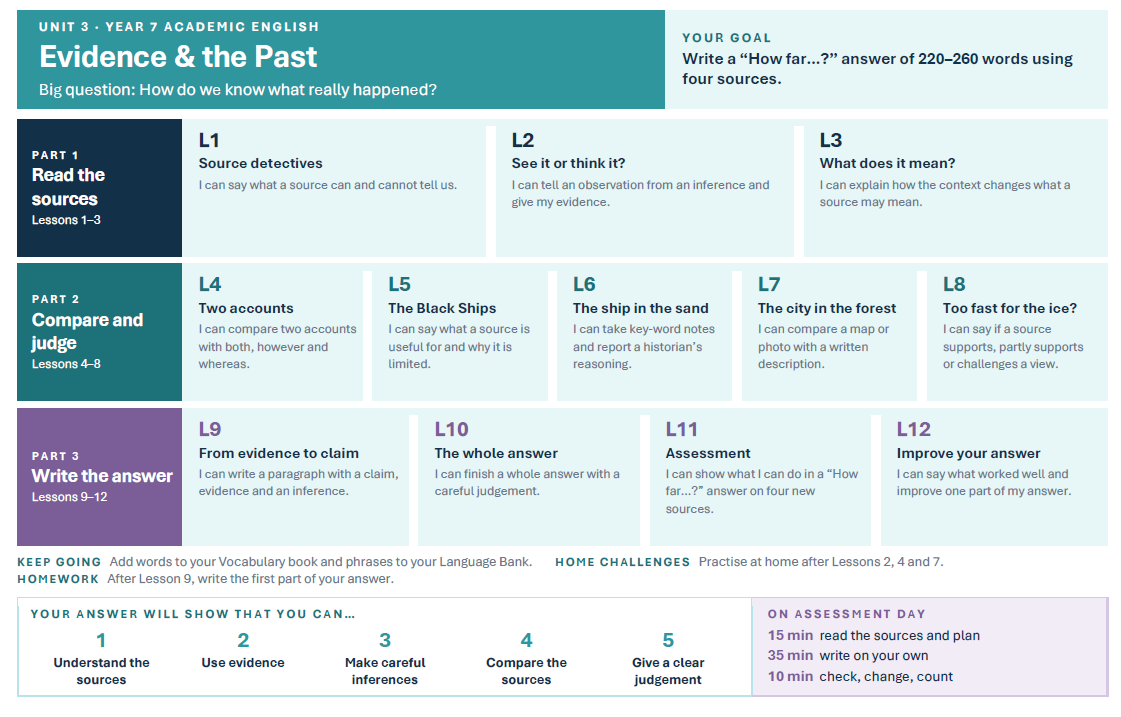
Basically, lots of skills building. Understanding sources, comparing them, judging whether they support certain claims, etc. The final task is to analyse a series of sources on the Krakatoa eruption in 1883 to evaluate how far they support a certain claim about the event.
Almost all target skills and language from the syllabus map were covered. I still kinda hit the vocab recycling target throughout the unit, but it’s lighter in places…
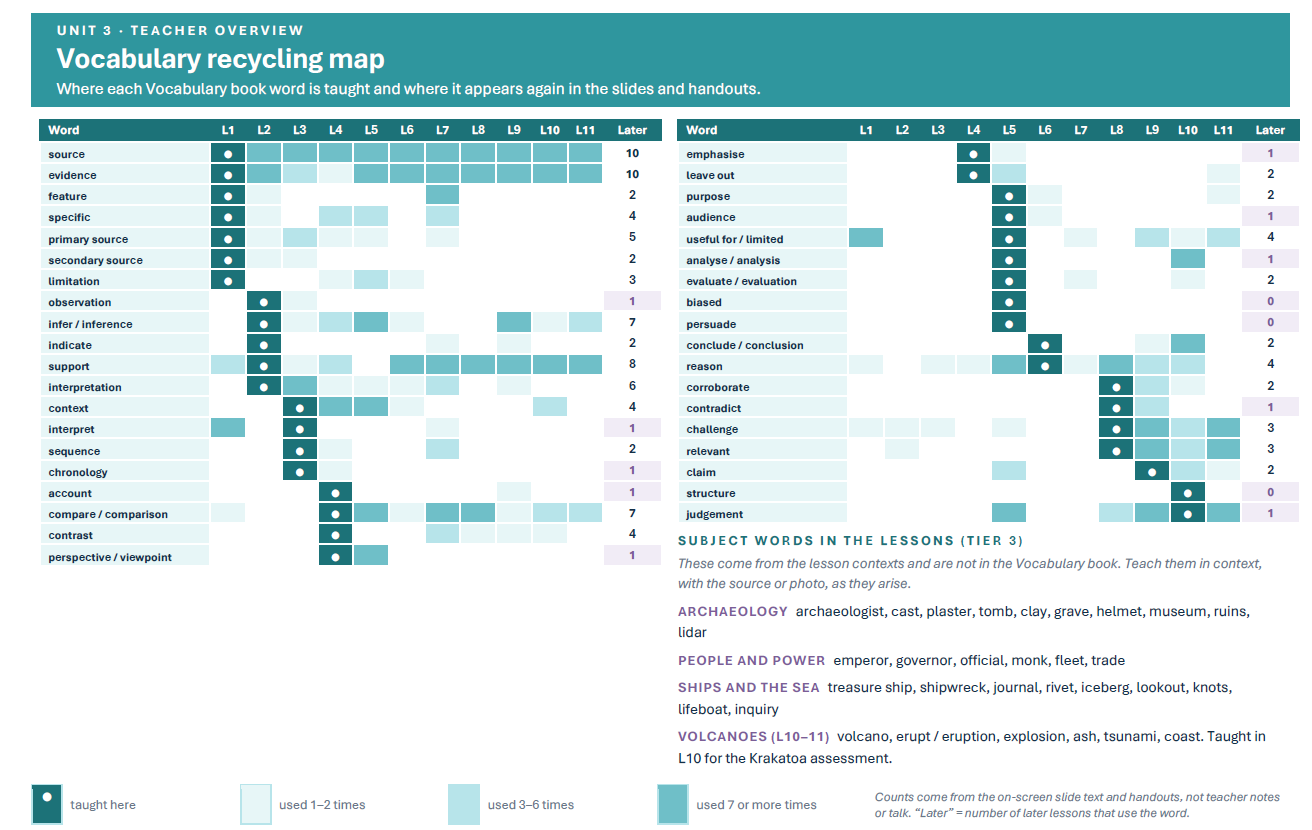
Still, I think there’s a bit more Tier 3 vocab in the unit compared to the last one. This is mainly because the contexts change often…
Changing contexts
Okay, so the overarching theme was history, and I had a choice.
- I could have stuck with the same context for the whole unit – boredom likely to set in
- I could have mixed it up every couple of lessons, that would keep things fresh
- A different theme each lesson – potentially quite scatty and overwhelming, could require lots of prior knowledge.
In the end, I actually opted to change the context of most lessons until the assessment model. Why? Because I wanted to bring in a range of culturally relevant contexts for learners, while also covering some British history given the English national curriculum leanings.
Here were the topics I went with:
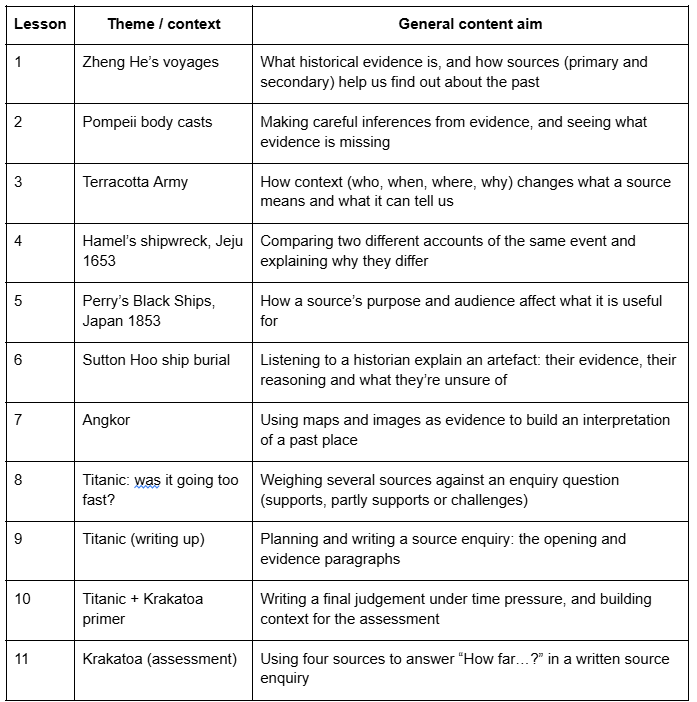
Why no Thai history?! The last intensive programme I taught here included learners from China, Republic of Korea, and Japan. History related to these contexts appears for familiarity/personalisation/etc. I had planned to include Thai history too (yesterday’s post highlights the importance of this) and it is important localisation in my current context. However, I decided that I would wait until I was actually teaching this unit (somewhere!!!) and sub in lessons on the Thai history topics currently being taught at the school. That way it can clearly link to mainstream content, providing in-the-moment support and consolidation. Method in my madness, huh.
This unit is particularly flexible, and I’ll probably end up with a whole other set of lessons on backup to sub in and out as needed; the sample you have wouldn’t be exactly the lessons I would teach in my current context. I’d also like to cover history from more geographical regions – it is very Europe and Asia oriented. Work in progress, yeah.
Image conundrums!
This unit took me longer than expected. The reason was image sourcing. Using AI as an image model has taught me a few things:
AI is not great at maps. It builds them by code, piece by piece, then adds labels by coordinates. You end up with stuff like this:
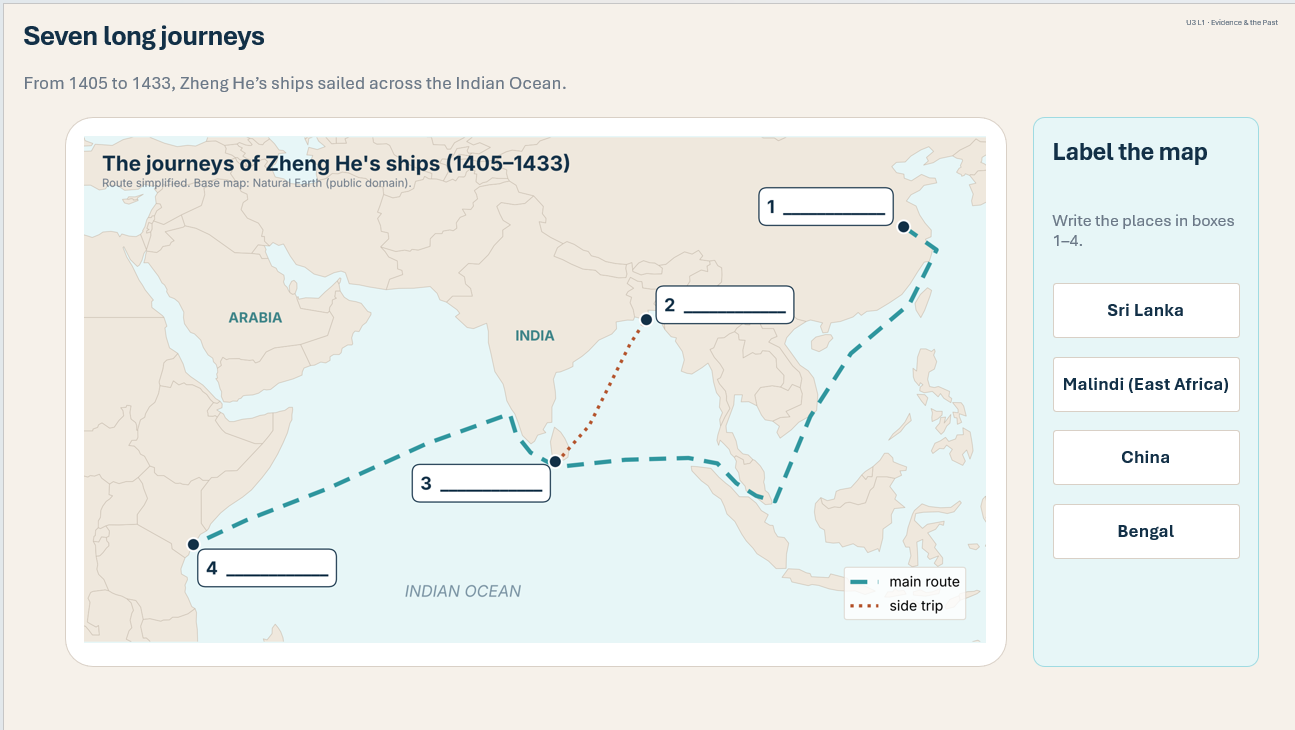
It does the job but could look flashier. I might feed all these back into AI for a zhush at some point. Claude is much better than ChatGPT for maps IMO. For interpretative illustrations in general, I find ChatGPT much better.
Image model bias is very real and western-skewed. I realise this is a known fact, I’m just saying – I see it! I’ve actually kept one example on this in my lessons as a task to critically analyse AI output, but that wouldn’t work in all contexts. Basically, it was this one of Hamel and his shipwrecked crew of Dutch merchants meeting Koreans on Jeju for the first time back in the 1600s…
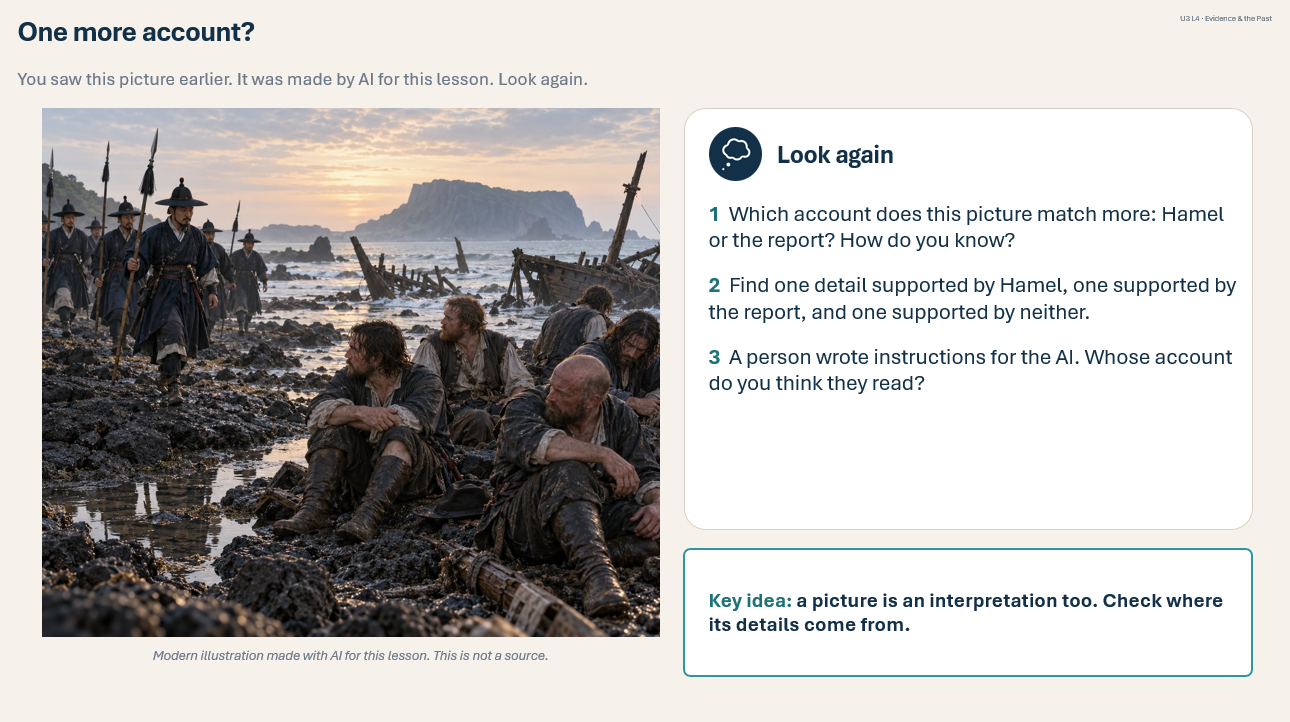
I feel like this is the type of thing we need to explore with learners more at this point – AI literacy etc.
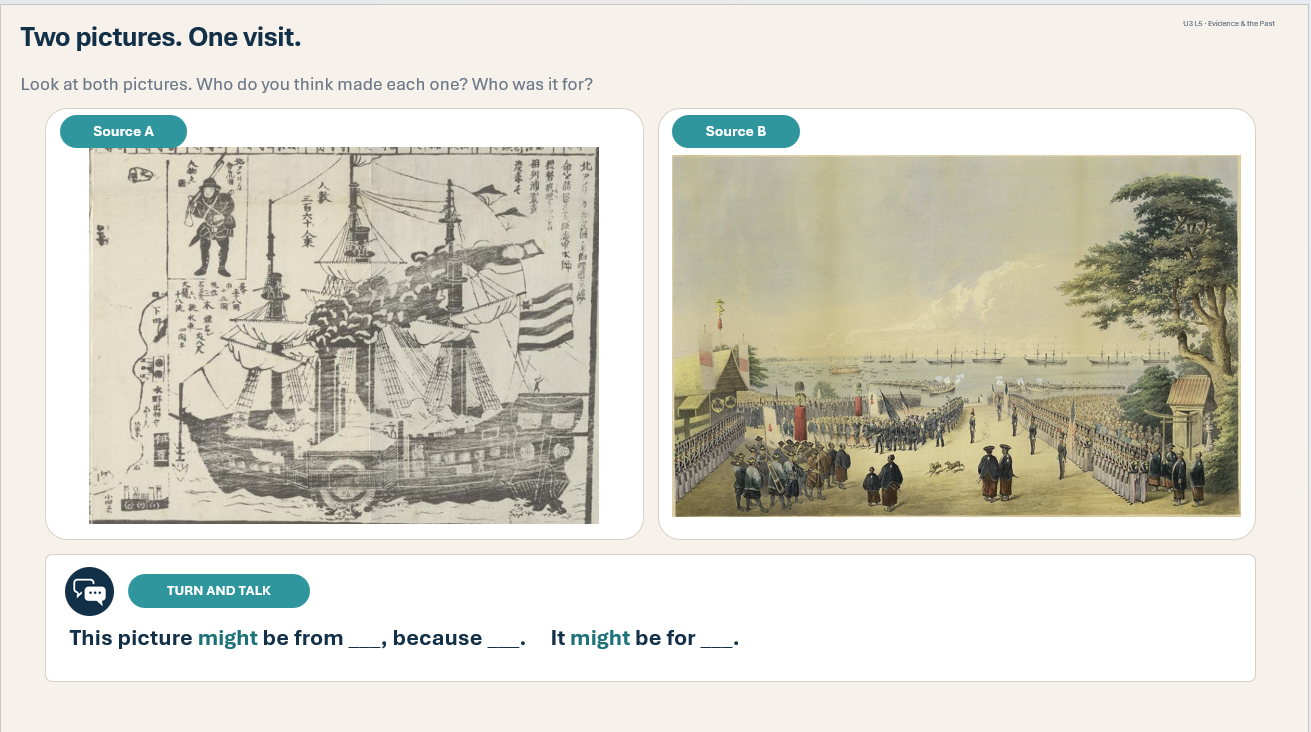
Anyhow, AI is very good at pointing towards public domain images for history. I still manually pull the images to make sure the CC license is okay, but it’s very good at directing users to suitable wikicommons stuff. This has added a level of authenticity to the resources:
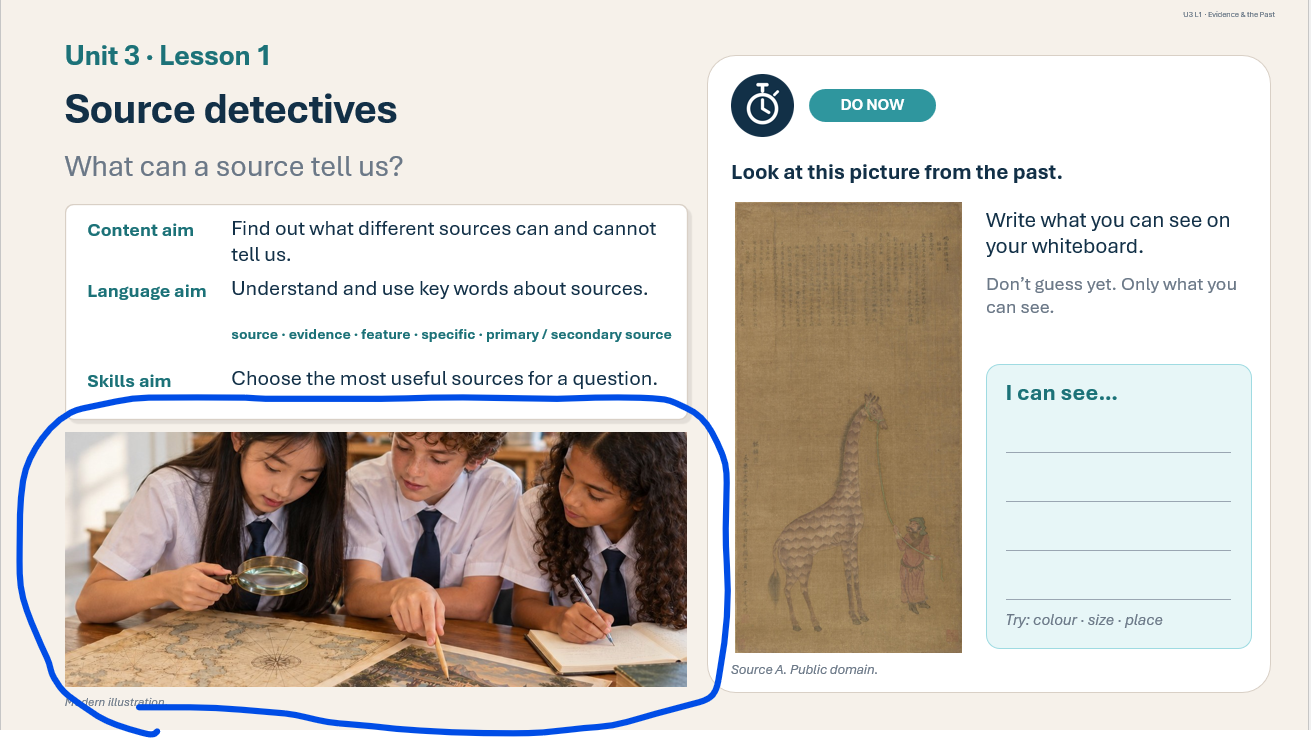
AI is an awful cropper. Image cropper, I mean. I don’t know what it’s impressions of Roy Cropper from Coronation Street are like. Anyway, it really struggles! My feedback involves screenshotting slides and putting big circles on them to highlight the bad cropping.
Anyhow, when it comes to giving clear prompts, it helps to provide examples of good image briefs so your AI project can build in some checks. I provide AI with a list of general guidance for images for my project, including guidance on inclusion, and guidance on the level of detail in artwork briefs. It’s still hit and miss at times though.
Grrrrrammar!
So, I wanted to avoid a ‘grammar snack’ route. Was there enough language input though? That was some feedback I received on Unit 2. With this in mind, I hedged my bets and added in some additional ‘Grammar Focus’ tasks. Although I tried to avoid coursebooky type wraparound, It feels like I’m ending up drifting towards it. Next time I say to AI ‘I think your drifting a bit – shall I reshare our lesson criteria for a reset?’, it’s going to respond ‘Whoa whoa whoa – pot and kettle, Pete.’ Still, on the grammar point, *this is what you want, this what you get…*
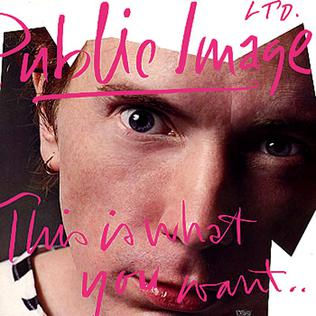
(Wikipedia)
Vocab pre-teaching
I dabbled with some pre-teaching slides in this sample, thinking of ways teachers could do this efficiently. AI is pretty good in that sense – you can cram all what you need in one image and explicitly teach it quite quickly:
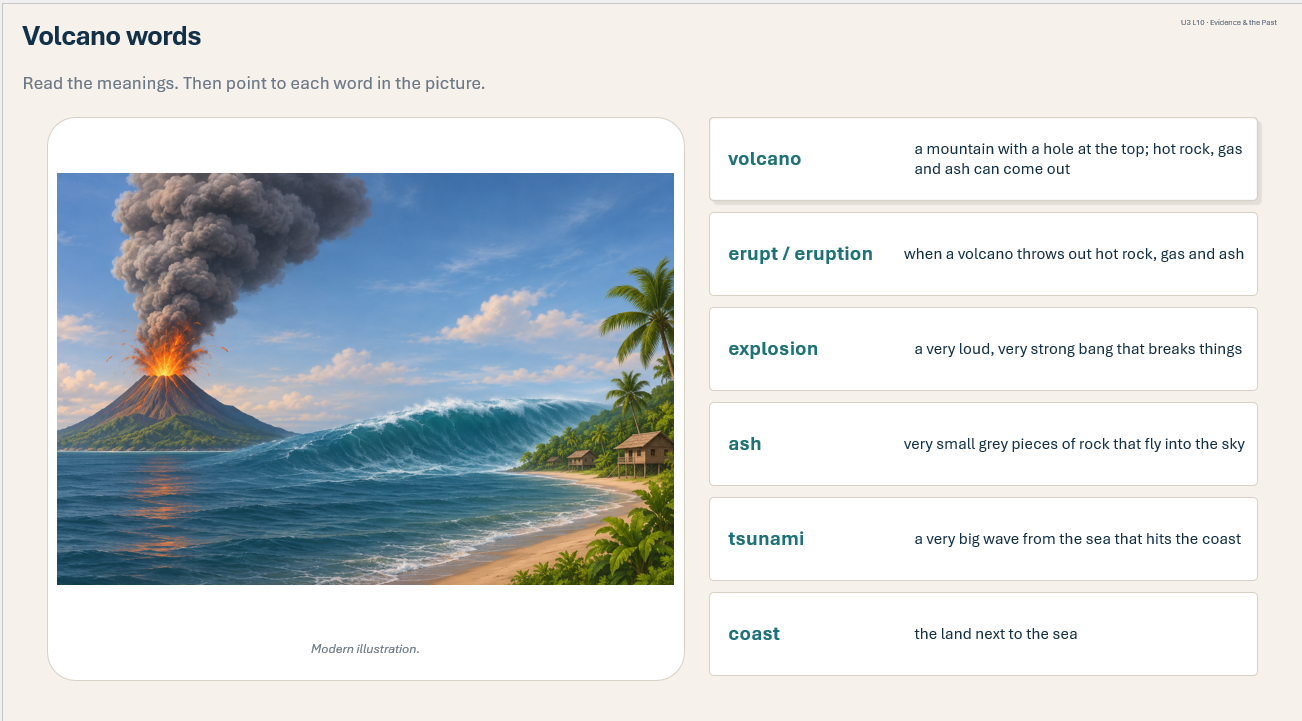
Nothing’s perfect of course, just getting these ideas in there. Will tweak for later iterations.
More ElevenLabs
I’ve been dabbling again with ElevenLabs for creating audio. I found the multilingual voice tool and that’s been great for getting more variety in there, albeit AI-generated and inauthentic. I’m a big fan of ElevenLabs so far – thanks again to Ross T for the recommendation.
Overall
So anyway, I’m two units down, and I’ll keep plugging away. This unit would definitely overrun in my opinion – I need the chance to teach it (or have it taught!), tighten it, strip it back, etc based on teacher and student voice. Above all, while I’d tweak this for context, I’m still not overly happy with representation in the unit. Plus, part of me is scared to go down that AI literacy route more even though I think it’s worthwhile for the learners, and the vocab recycling in this unit could be tighter. So, I’ve got work to do even before user feedback.
Aaaanyway, onto the next unit. Urgh, I think there’s a video needed – that’ll stretch my ElevenLabs skills!
Categories: General, materials writing, teacher development


Leave a Reply