
Here are some more scaffolding tweaks I’ve made to our Year 7 mainstream English content.
Last term, learners studied ‘Fantasy Writing’. It was an awesome topic and the in-house resources overall were brilliant. I had tons of fun teaching it!
I felt that there was real depth to the curriculum content. Learners explored the ingredients of different fantasy subgenres, learnt about characterization and ‘the hero’s journey’, explored how to describe a setting using different types of imagery, how to build tension, features of action scenes… All of this was covered in far more detail and more technicality than I’d imagined.
When it came to the end of unit assessment, in which learners wrote their own extract from (any part of) a fantasy story, I felt that more scaffolding was needed at the planning stage.
I anticipated that some learners would struggle with an initial idea. We got that out there in 5 minutes:
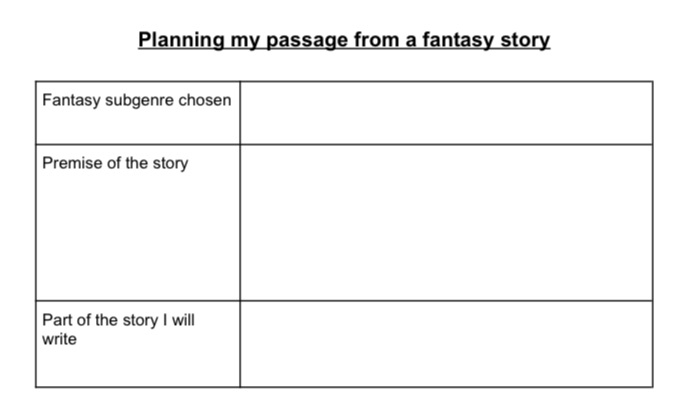
With learners getting feedback from their partner on initial ideas. Nothing fancy, but this ensured everyone had committed to some kind of direction.
Straight after that, I tapped into the content and language focus.
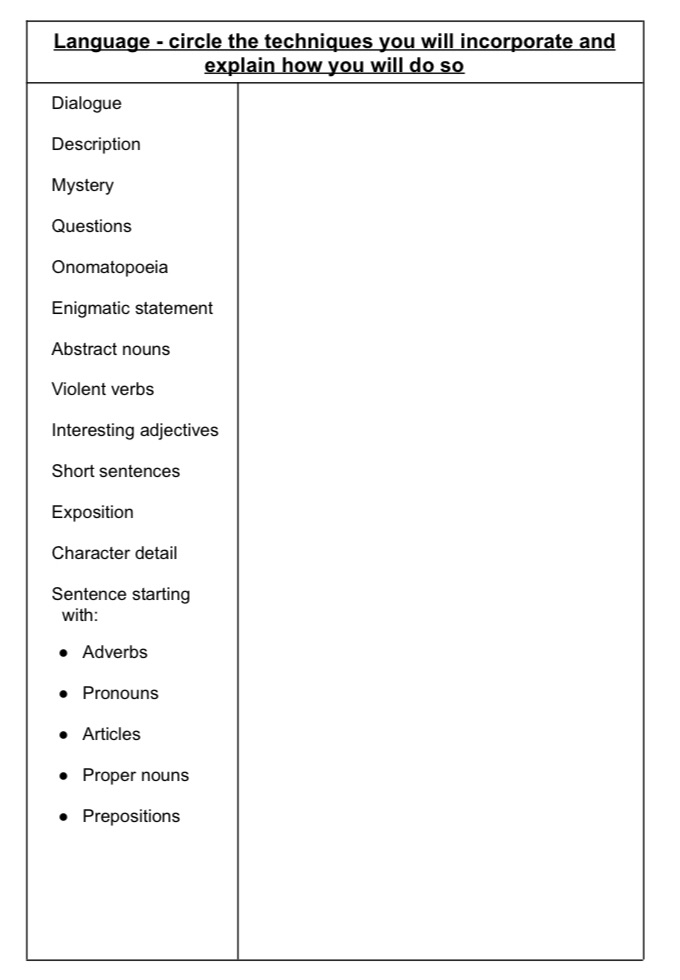
This was a short planning phase, more just ideas generation for 10 minutes. What I was most interested in was the ideas that jumped out to learners. I wanted to see who was linking ideas from the unit into their own planning – *relevant* to the extract chosen. For example, we’d spoken about the use of ‘violent verbs’ in actions scenes, short sentences as awesome lead-ins for quickfire action (eg fight scenes), etc. This ideas drop was more of a diagnostic. I identified 3 learners to monitor more closely leading up to the task, as they weren’t really linking content and language features to their chosen passsge.
Next was more structured planning. I’d looked at the lesson content throughout the unit and added the features of fantasy writing that we’d analysed into tangible planning docs.
Learners could choose to write any part of their own story, so the planning docs were specific to the parts/features we’d covered:
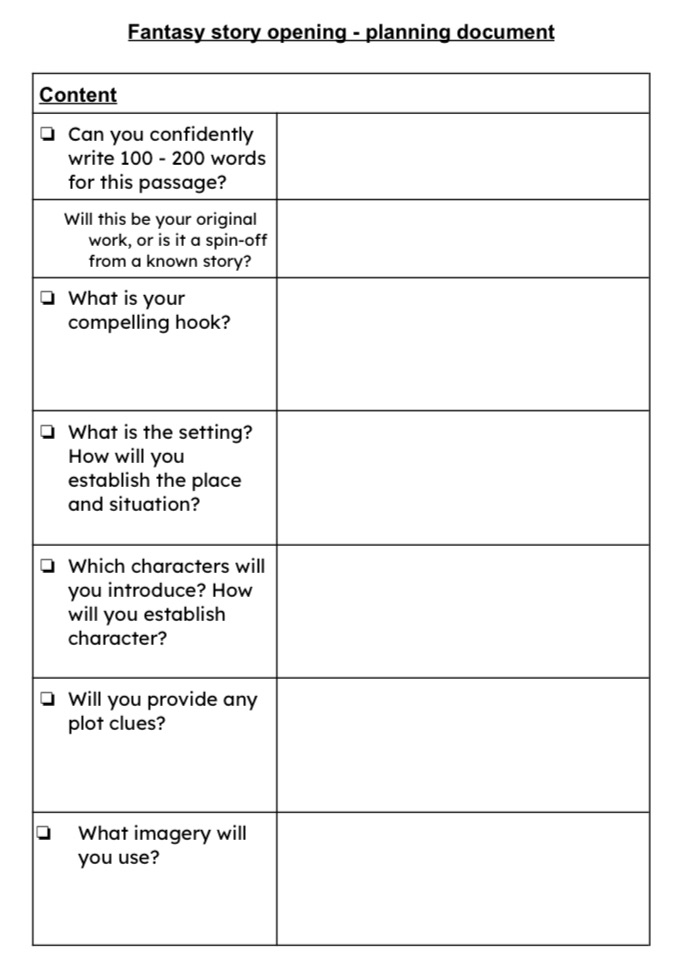
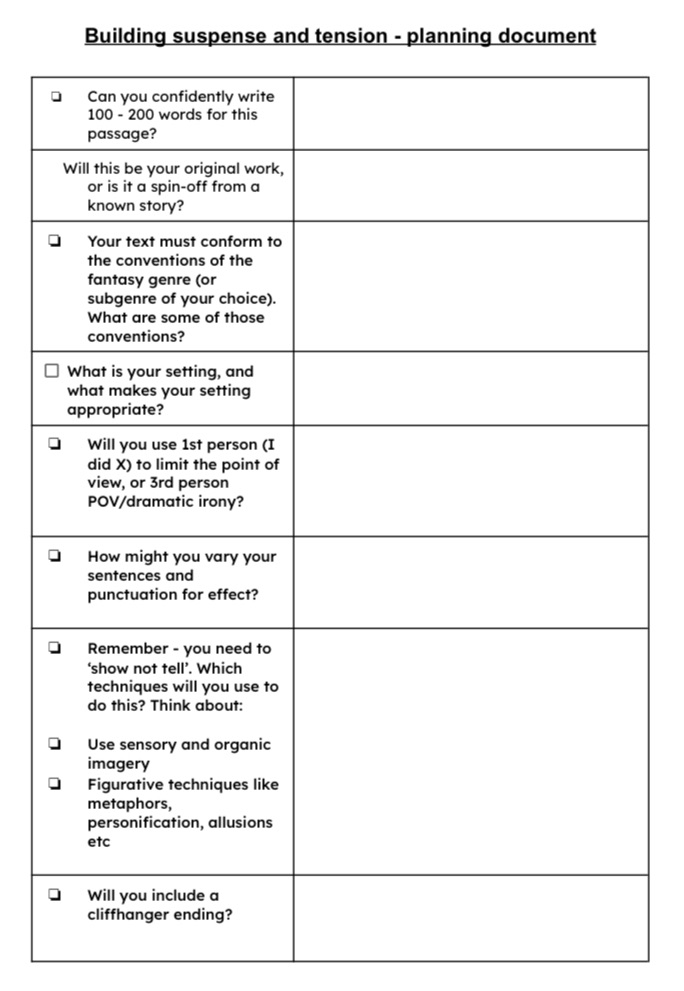
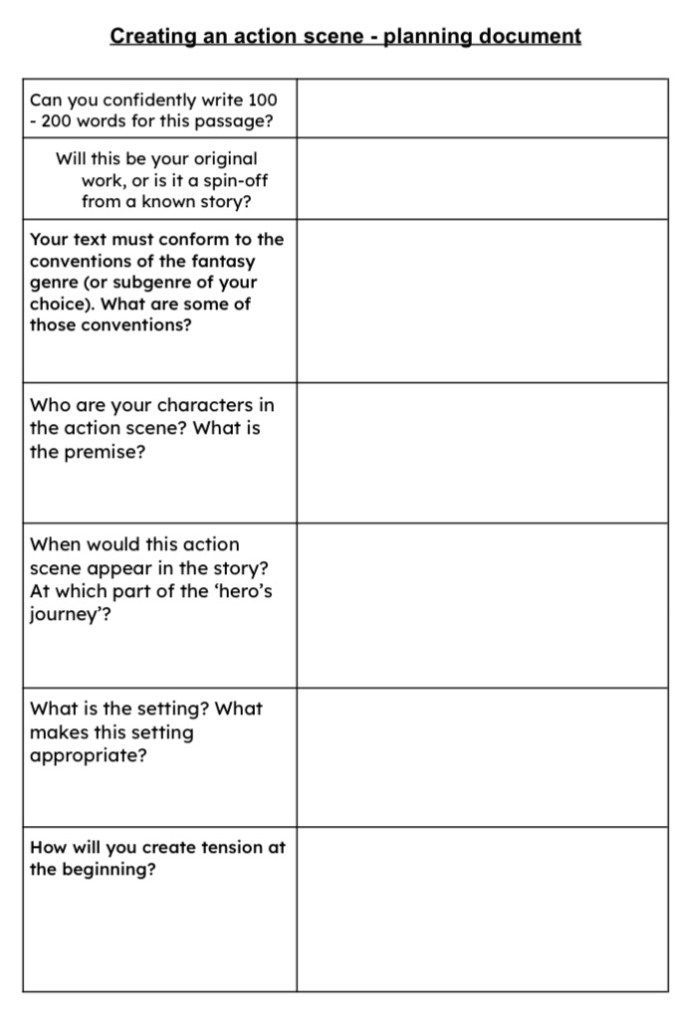
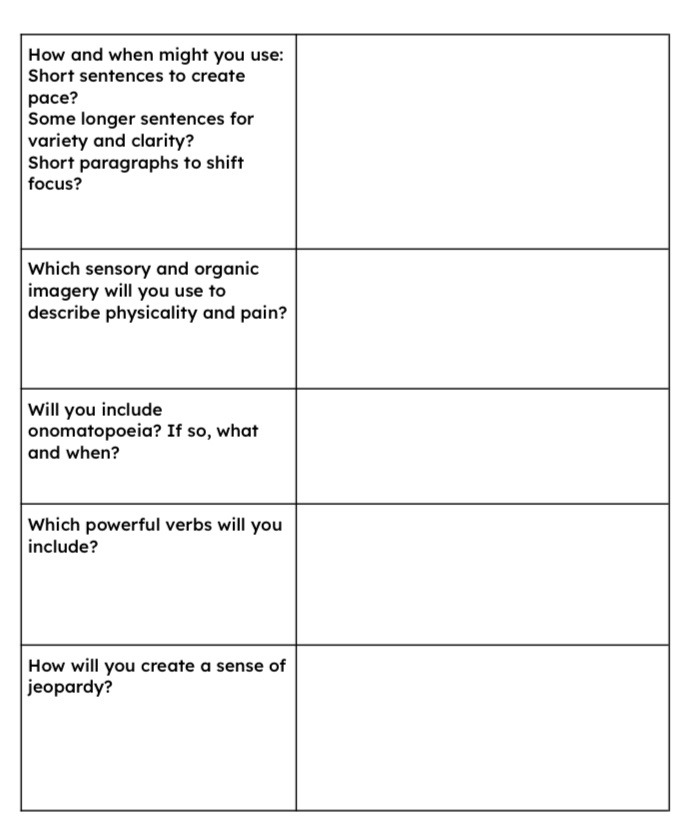
This made for a good lesson tbh. So much micro-teaching going on, and working out who was where in understanding various content/language features. I’m glad I got learners to be quite step-by-step in their planning here as (I felt) it helped make the writers more conscious of their choices.
Speaking of which, I added in another feature to the assessment – creating a rationale.
These kids are super-skilled when it comes to vocabulary range and grammar accuracy. They get the gist on content and language features to the extent that they can ‘perform’ them, but how much do they understand the impact of the choices they’re making on the reader?
I got each learner to create a video ‘rationale’ explaining their language choices. I provided a script if needed:
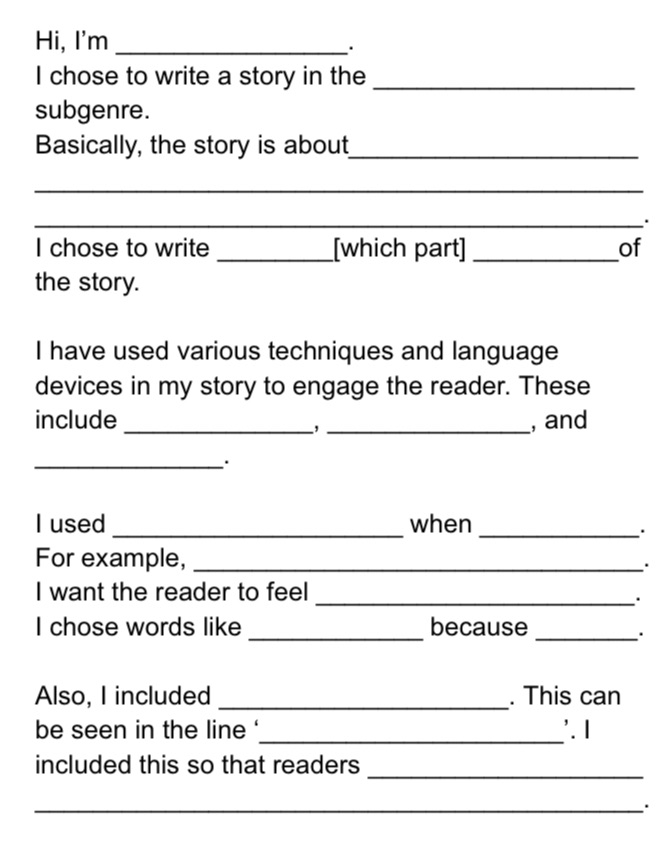
I watched each rationale as I started to mark the work – they were a real insight into the learners thought process, and understanding how conscious/deliberate they were in their choices.
Rationales hey? You think these are professional writers or something? You know what – yeah, I do. Kinda. My first thoughts on teaching more first-language English is that it needs more reality. More real audiences and real purposes, not just pedagogical progress towards a high grade. Even at Year 7, many of my high-flying learners can churn out PEEL /PEAZL paragraphs analyzing the linguistic choices of authors. How conscious are they of making those choices in their own writing?
Anyhow, my adaptations here were mostly reshapings but they adapt support (planning) as well as stretch (rationales).
Image by Lisa Che from Pixabay
Categories: General, Lesson Ideas, other, teacher development
 ELT Planning
Leave a comment