
I teach a support group of EAL learners in Year 6. We study the same content as all other English classes and take the same assessment. It’s just that the content and lesson resource needs a bit of adapting to help the learners access it. We’ve just been reading and analysing Floodland by Marcus Sedgwick.
If you haven’t read Floodland then basically it’s teen-lit about a dystopian world where Norwich is flooded and a girl, separated from her family, must find a way to survive. My class LOVED it. The unit was planned by a mainstream teacher, but I felt parts of it needed adapting to suit my support group. Here’s an overview of some of the adaptations made – would you say it’s the type of enhancements you’re making to content too?
Prior knowledge
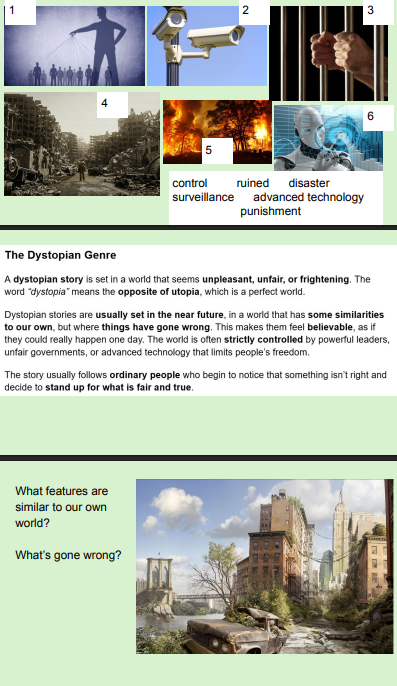
I added more scaffolding for prior knowledge to the existing planning. My learners needed to understand more about the dystopian genre, so we explored that first, using a short text (then later some discussion). Example:
Making connections
We went a bit deeper into relating the context to what students already knew. The original planning did touch upon this with videos and discussion, but we did bigger mind-maps of the utopia vs dystopia idea:
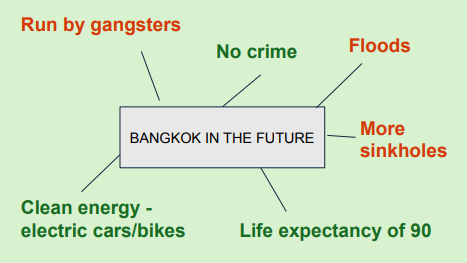
And created sketches of a future Bangkok, etc, just to make it more relatable.
Regular recounts (scaffolded)
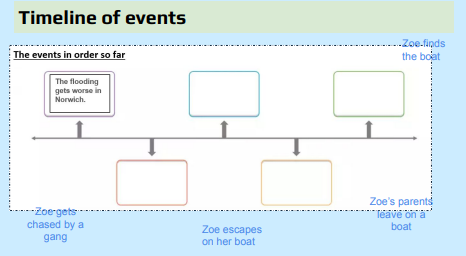
The mainstream resources assumed more of learners, providing blank timelines for them to complete. It was much easier for my learners to be given ideas to sequence, then to recount this more independently as time went on.
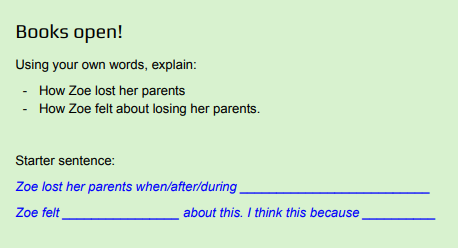
Mini-writes with sentence starters were used for recounts too. Again, scaffolded and little but often.
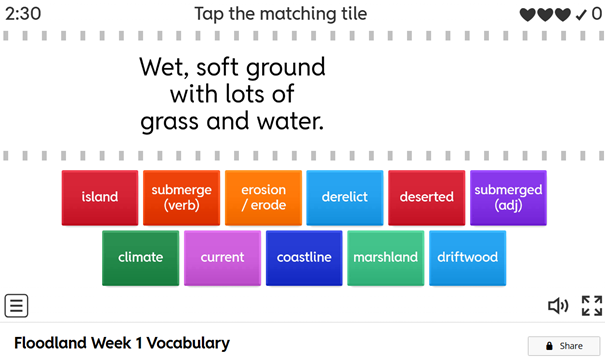
Wordwall for vocab recording/reviews
The mainstream content introduced 10 or so topic-related words each week. There weren’t reviews built in, so I got that all stored on Wordwall to make it easier to review little and often.
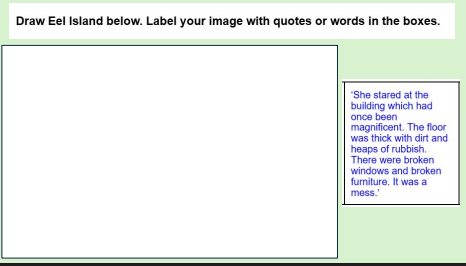
Visual response tasks
These were actually built into the mainstream planning, which was good. I just made a bit more of them and live modelled the tasks (in part) to support learners.
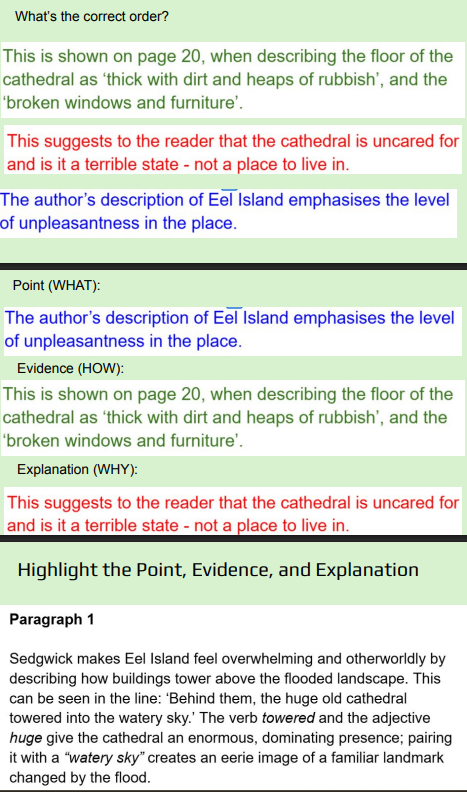
Support for PEE
The mainstream learners are expected to do A LOT independently. I felt that the support group needed more of the stuff I used to do back in the the UK (PGCE, 2009). Rearranging paragraphs, identifying PEE in models, completing parts of PEE.
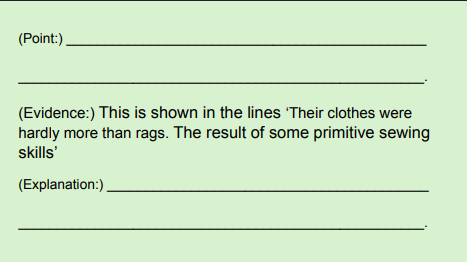
I’d imagine this would be standard adaptations for other mainstream teachers, but it’s just not needed as much in this context given the learners overall ability. A ‘useful for all, crucial for some’ tweak though was to add sentence starter support for more independent writing:
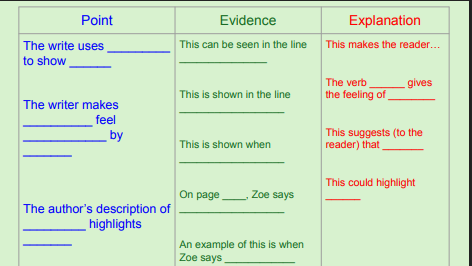
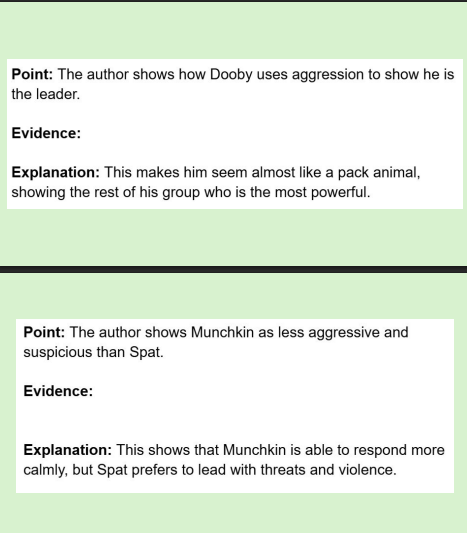
The ‘drawing out evidence’ step proved tricky, so this became our starter task for a while…
Support for expanding vocab
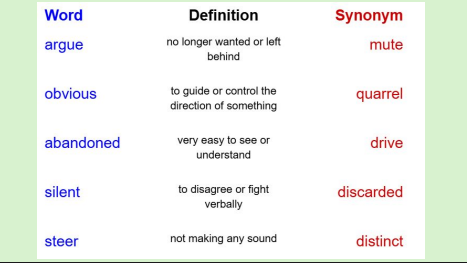
Again, the starter tasks for vocab expansion in the mainstream needed more scaffolding. They looked like this:
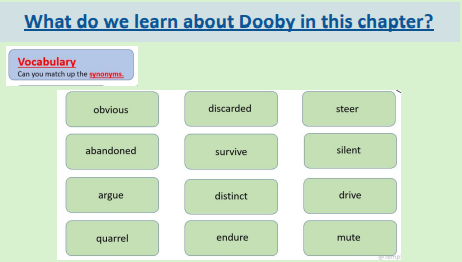
I’d make them into this, and encourage research into unknown terms:
Exploring character feelings, intentions, characteristics, etc
My learners seemed to need a bit more support in exploring character feelings. I used this type of exploratory task to help, which proved to be really useful.
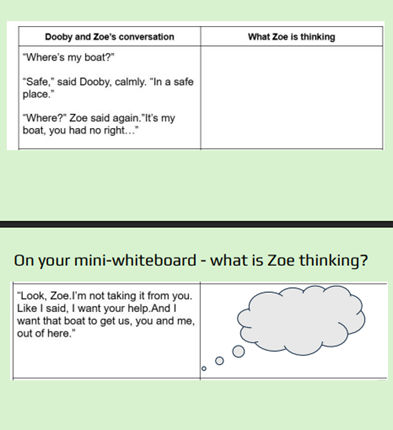
And for characteristics, I used layered and colour-coded mind-maps to first identify actions/words, then to think about what these taught us about the characters:
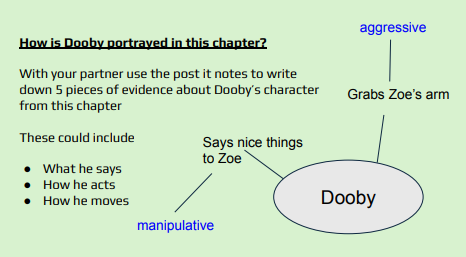
It turned out that the group loved a good mind-map, so we came back them with new ideas often.
Diamond 9
These were used a few times in the mainstream resources. I tended to add a bit more visual support there to prompt ideas:
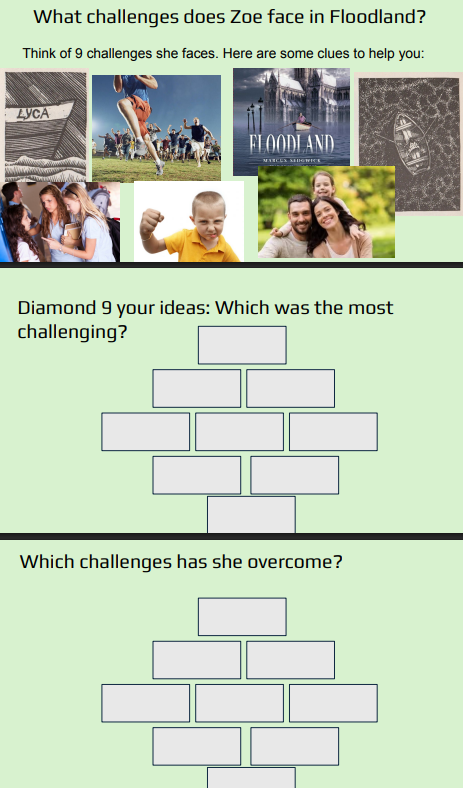
Oracy-focused adaptations
Some of the ESL classics were snuck into the planning. Barrier games serving to review content whilst developing oracy skills:
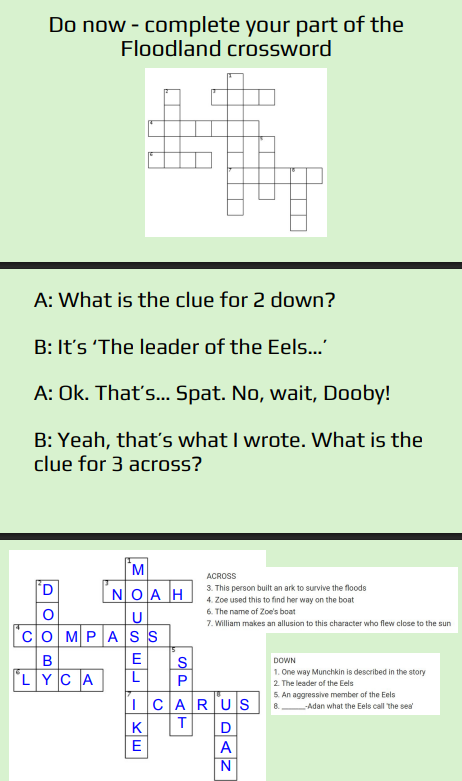
With retrieval grids for quickfire questions, which I adapted into battleships style games.
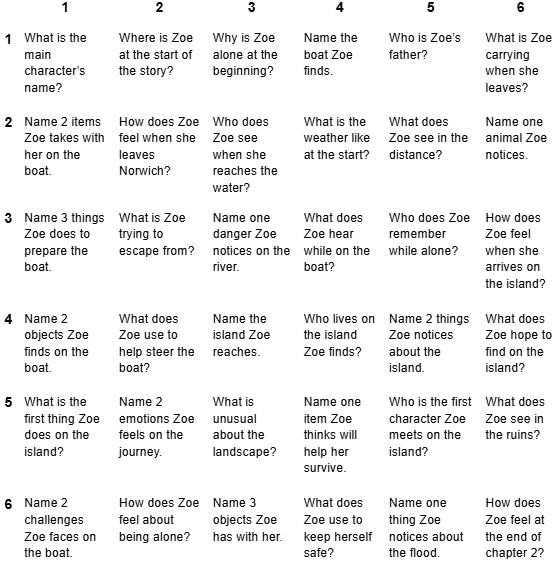
Etc.
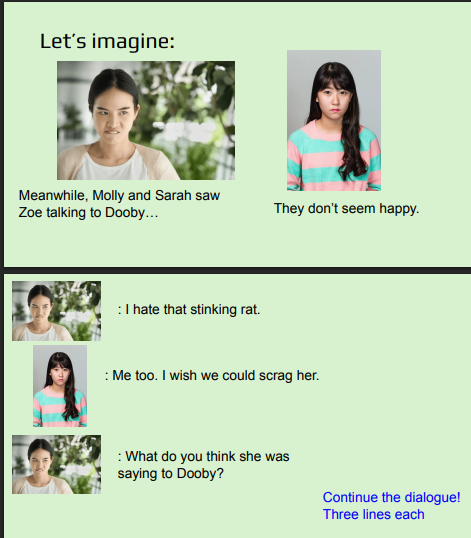
Roleplay for exploring characters
This proved really popular with my Year 6s – they loved a bit of drama!
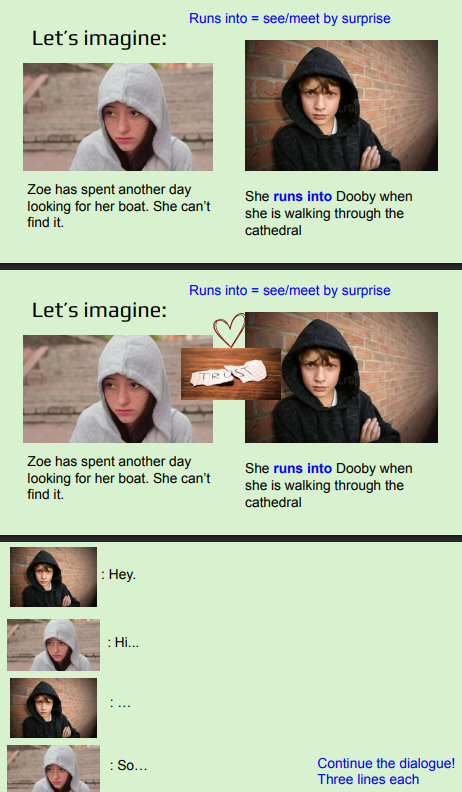
Especially when they got to be the more horrible characters!
Physical response tasks
These weren’t weaved into the mainstream resources – an experienced teacher would be expected to include them naturally I guess. The Year 6s certainly needed them! Lively bunch!
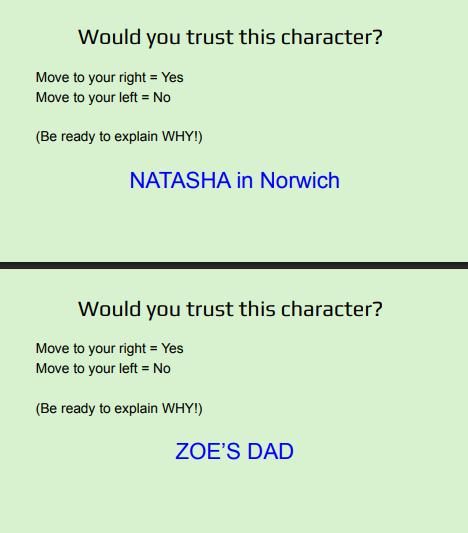
Talk for writing
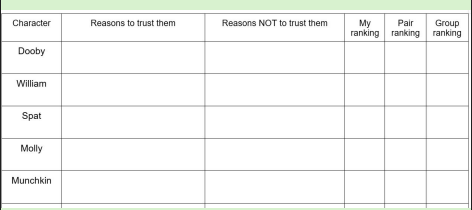
…and the above tasks would serve as a scaffold for pre-writing tasks like this note-taking one ( leading into paragraphs on characters to trust or not).
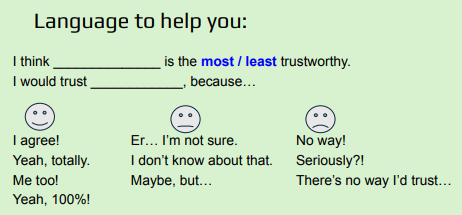
Process language
I don’t find language to support certain process that often in our resources, so that’s another thing to get in there.
Scaffolding for assessments
The assessment required learners to talk about certain challenges Zoe faced. They needed to PEE or PEAZL their paragraphs, and the evidence was the tricky bit. I thought it was fair to draw attention to certain useful language, but not to hand it totally on a plate:
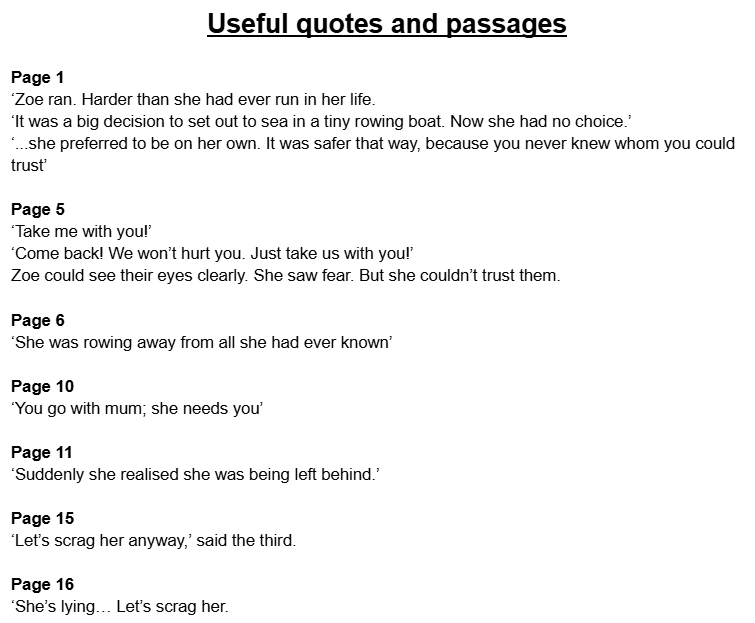
Learners could explore this, remind themselves which character said the quotes of performed the actions, etc. Some support, and they could build the rest around it.
Other support
Generally speaking ( and this is something relevant to a comment on this blog the other day), a scaffolded approach to the reading required purposeful staging as well as the activities above. I added in more core reading skills that the resources probably assumed teachers would help develop: previewing, predicting, general understanding, detailed understanding, etc, and a range of DARTS in there as always to build meaning.
Anyhow, that’s just a snapshot into the day-to-day at the moment – tweaks to support my learners in accessing literature. As I’m sure you can see, some of what I’ve added needs enhancing for the next iteration, but you don’t have time for everything first time round.
Categories: General, Lesson Ideas, other, teacher development
 ELT Planning
Leave a comment