
The personal statement for the Assessment Only Route to QTS is 2000 words. In this statement, you should respond to the following questions:
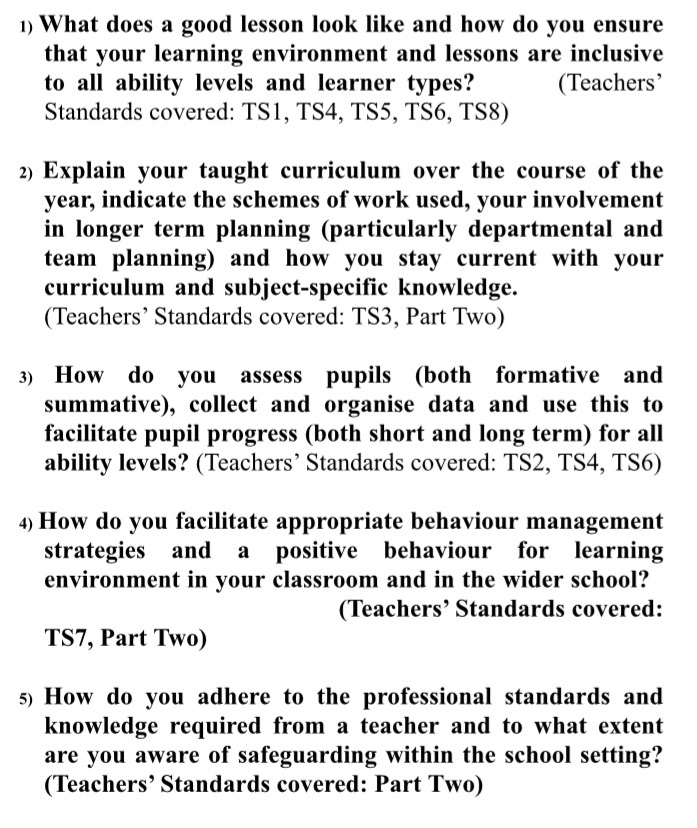
So, you’ve got roughly 400 words to address each question.
This took some thinking about. Reflecting on my own practice can be quite an uncomfortable / damning / enlightening / frustrating / disappointing / ‘do I really think-do-say-feel that?’ process. Being tasked with summarizing things like ‘what a good lesson looks like’ in barely 400 words was quite stop-start process for me. Everything I wrote sounded pithy, flowery, or contrived. Awful task! It feels a bit Julian Edge though, which is something.
I’m not hiding. On another day, I’d have written something different, but somehow similar, to this answer (see below). The crux of what I emphasize as a teacher is in there – meeting learner needs, embedding formative assessment, forefronting meaningful communication. Once you tie me down to specifics … ooooh it veers off a tad.
That’s fine. I’ll own it. And that vague ‘principled use’, ugh. I’ve got to shake that.
What does a good lesson look like?
Good teaching helps learners move forward in their learning. In order to achieve this, it is important to analyse the specific needs of the learners themselves – establishing where they are currently ‘at’, and devising support to help them move towards where they need/want to be (i.e. general principles of Assessment for Learning). Generally speaking, key components of a good lesson sequence would likely include:
• A needs analysis phase (e.g. Long, 2014). This may take place before the immediate lesson, as it may be identified in a previous lesson.
• Scaffolded support which can be gradually reduced as learners gain competence and independence(e.g. Rosenshine, 2012).
• Embedded formative assessment to establish whether learners are moving forward and identify further gaps (e.g. Leahy et al, 2005).
• Reflection on the part of learners (e.g. to help them access their own performance and next steps), and on the part of teachers (e.g. to shape further learning around newly identified gaps; to review the effectiveness of the support provided)
It is sometimes possible to predict learner needs rather than have to explicitly establish them. For example, when teaching IGCSE ESL, my learners often exhibit strong listening skills, but they may not apply effective strategies before, during, and after a listening task. Such strategies may serve to lower anxiety, help focus attention on salient features of the text, or check understanding. If we know this to be a common area of development among learners, we may skip a more explicit ‘needs analysis’ phase of learning, relying instead on our experience in order to establish the learning goals.
Context is, of course, important. A good lesson to one teacher may lack purpose to another. In my context, I am at odds with many maths teachers’ use of direct instruction to lead input, as explicit learning is not considered the default mechanism of language acquisition. In turn, maths teachers (supporting in my class) have been bemused as to why I suggest learners discuss the general topic of a reading/listening text prior to focused skills development tasks. My aim is to activate prior knowledge, predict upcoming vocabulary, and lower reading anxiety. Two such strategies are perhaps less relevant in the maths classroom, so it’s no surprise that they seem redundant when viewed through a subject-specific lens. Critical discussion among teachers across subject areas helps to bridge understanding. I’m all for it, and I learn a lot from it!
If I had to pin down features of ‘a good lesson’ though, I’d probably say:
• The learners want to be there. I mean, they might want to be somewhere else, but it doesn’t feel like a hardship to them! (I’m in compulsory education remember!)
• Something hooks them enough for them to want to express themselves and ‘find the words’ in English. There ends up being mediation between the learners, genuine communication, and the chance for a teacher to let learners build understanding together.
• When things need to be taught, they are taught. But we rarely lead with that.
• Tangents are embraced, if they prompt meaningful communication in the target language
• The use of home languages is embraced, with ‘principled use’ clear to all participants
• ‘developing speaking confidence’ counts as a default aim even where no ‘new learning’ (e.g. of a concept or of subject content) has taken place.
The latter is the nature of EAL teaching at times. Sometimes, the confidence to express oneself in an EMI context regardless of proficiency level is the baseline skill/disposition to work on above all others.
How do I ensure that my learning environment is inclusive?
• I respect the silent period of language learning (e.g. Krashen and Terrell, 1983)
• I embrace principled use of home languages (e.g. Hall and Cook, 2012)
• I aim to address features of a culturally sustaining pedagogy, such as use of L1, identifying learners funds of knowledge, and moving beyond a ‘deficit model’ of EAL (e.g. Paris, 2012)
• I try to address more than just ‘academic inclusion’ in my setting, considering aspects of social, linguistic, and attitudinal inclusion also (e.g. Evans et al, 2020).
Selected examples of how I address Evans et al (2020) dimensions of inclusion:
• EAL learners as ‘language learning role models’ for each other – on displays, in lesson content, etc.
• Home language buddy systems for new learners.
• Translated content for lessons, assessment criteria, and parent communication
• Principled use of translation equipment (such as translation pens and Google Lens)
• Encouraging EAL learners to take leadership roles in CCAs, such as leading debate teams.
Go on! You’ve got 400 words! What does a good lesson look like to you? Bloggers… GO!
Image by Marlon Romanelli Romanelli from Pixabay
Categories: General, reflections
 ELT Planning
Leave a comment