
This CPD session that explored types of inclusion was for delivered to our EAL department only (4 staff).
Why this session?
I took a course on EAL coordination through the Bell Foundation back in September/October (see my review here). The input on types of inclusion that referenced Evans et al (2020) was an important takeaway from the course. I felt like it was worth sharing this with my team and reflecting on how well we address these different areas of inclusion in our setting.
Approach
Mostly reflective tasks and discussions, with a bit of trainer input to describe content in Evans et al (2020) chapter 6.
Delivery
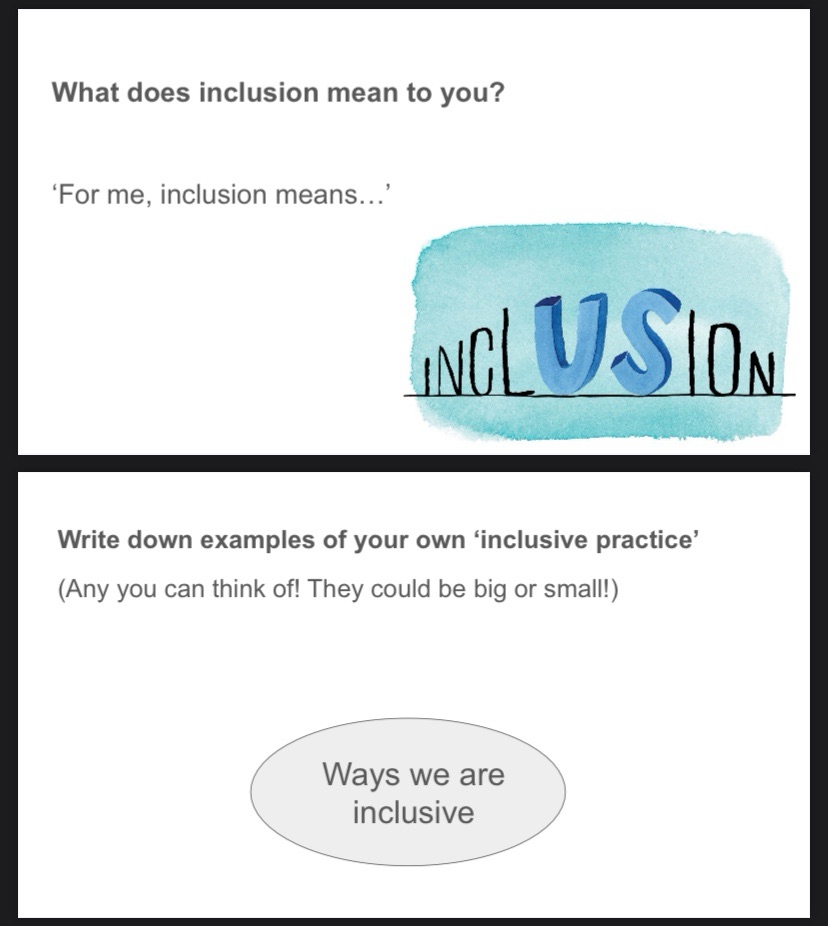
We started with each participant writing their own definition of ‘inclusion’. I felt this was important as the concept can mean different things to different educators depending on prior experience. This fairly open task brought up lots of key concepts (equity, equality, differentiation, access for all, etc).
We then listed ways that we feel we are inclusive in our current practice. This prompted discussion, and hinted (based on the actions listed) that we may be thinking of the concept on inclusion in a narrow sense (ie. mostly academic inclusion).
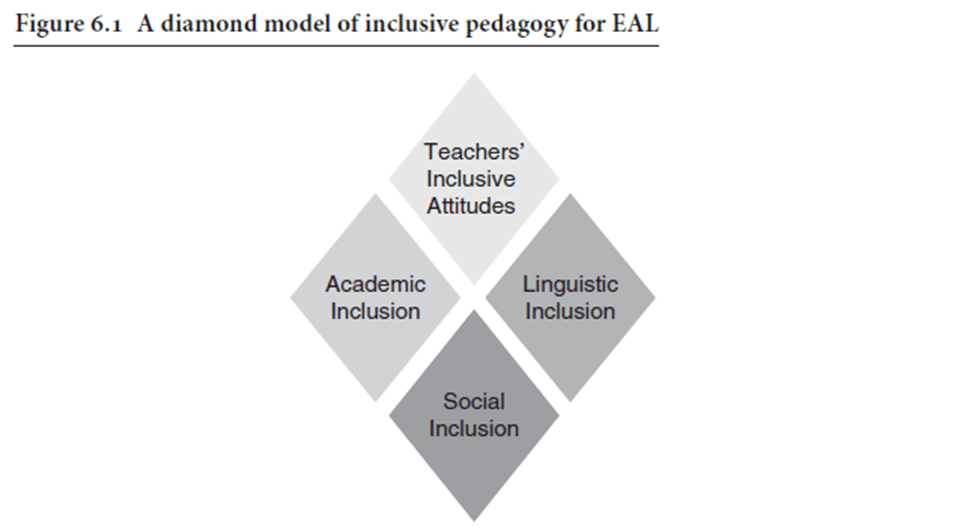
We moved on to discuss the types of inclusion mentioned in Evans et al – the ‘inclusion diamond’:
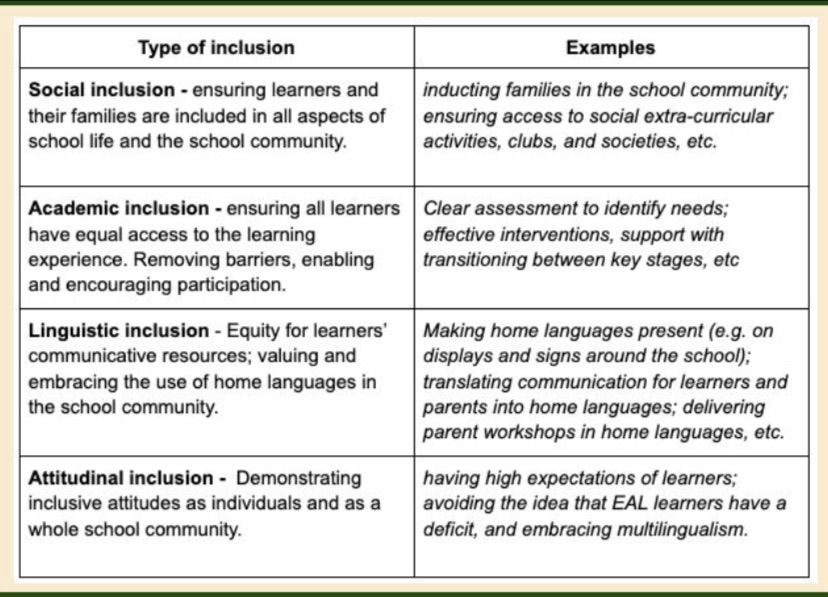
And we discussed a few examples of each inclusion type:
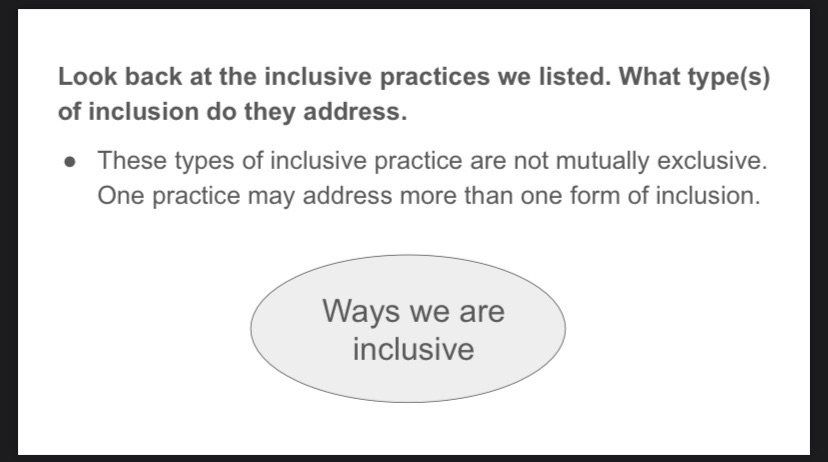
With this (new) distinction in mind, we revisited our list of ‘ways we are inclusive’, and reflected on the type(s) of inclusion our actions addressed – social, academic, linguistic, or an inclusive attitude. We made a note of the types of inclusion addressed next to each action, which gave us a good snapshot of the extent to which certain inclusion types were evident in our practice.
Next, I shared plenty of examples of what might be considered ‘inclusive practice’ from within our own department. Teachers may have already mentioned these, but it was a good way to reflect on our processes and practices and highlight that much of what we are doing already does address aspects of inclusion. I asked the group to discuss what inclusion types these may address. Examples:
⁃ a photo of our ‘language learning role models’ display (mentioned here)
⁃ A photo of our EAL community wall where each learner has shared a video self-introduction. This is displayed in our learning hub and is accessible to all teachers and learners
⁃ Copies of the periodic table in various languages, which we provide to learners as needed/requested
⁃ Word mats with key terms for maths translated into various languages
⁃ Snapshots from our EAL learner profiles
⁃ Translated information for parents
⁃ Etc
There were plenty of examples and, large or small, they were all important.
Thinking about our inclusive practice on the whole, we then discussed the following questions:
⁃ are there areas of inclusion that we address more than others?
⁃ Are there ways in which we can tweak our current practices to address further types of inclusion?
⁃ What more can we do to ensure a more inclusive environment for our learners?
Impact
One takeaway was that we already do a lot to ensure our practice is inclusive. Another was that we could do more when it comes to social inclusion, and we shared some ideas related to that.
Follow-up
I shared the presentation as part of our TeachMeet at the school. This is like a gallery walk where teachers present an area of their practice they’ve been researching/exploring/etc.
I realized that the CPD session would be worth delivering to the whole school. I’m co-leading on strategic development for inclusion in the high school, and we have some time for input during staff induction next month. This session will probably feature in some form.
As regards our practices in general, the session served as a reminder to consider our practices through a broader inclusive lens. The types of inclusion we covered have come up in various discussions since, and we have that shared understanding of them since this session.
Feel free to get in touch if you’d like to know more.
Categories: General, teacher development
 ELT Planning
Leave a comment