
The second CPD session I delivered to the whole high school this year focused on oracy development.
Why this session?
Our EAL learners need more opportunities to develop their communication skills in mainstream settings. Curriculum coverage and institutional constraints can make this challenging. However, making tiny tweaks and leading lessons with oracy related activities can (I believe) have a huge impact on teaching and learning – for all, but particularly for EAL learners.
Approach
I chose to deliver this session as a recorded presentation (35 mins). Basically, Term 3 for us was a killer, and at no point did I feel that an after-school CPD session was likely to be received by teachers in a positive/productive way. We needed more of a ‘dip in when you’re ready and have the headspace’ approach, hence I made a recording.
Oracy is a big area. I honed in on leading lessons with oracy-focused tasks as it sets the tone for a communicative classroom. Well, I assume it does…
Delivery
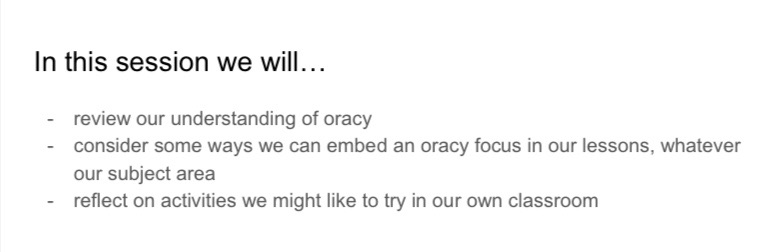
Here were the aims of the session:
I began with an overview of oracy as a concept, leaning a bit on Voice 21 (framework not originally from them but a good reference):
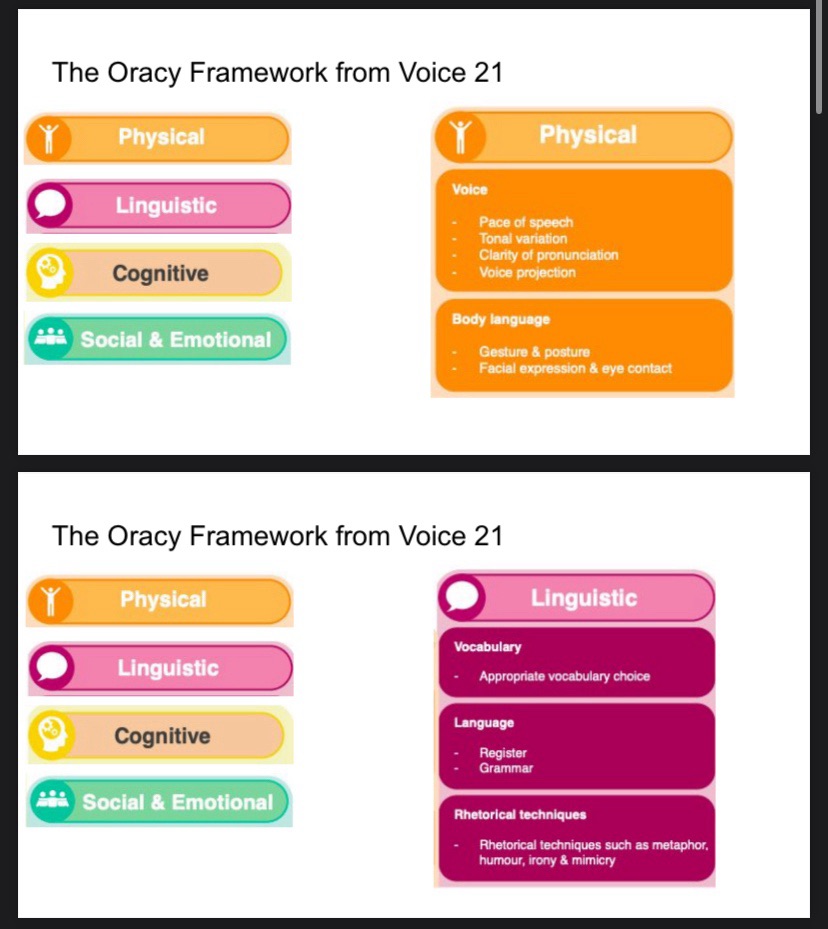
Etc…
And then we linked things to the Bell Assessment Framework:
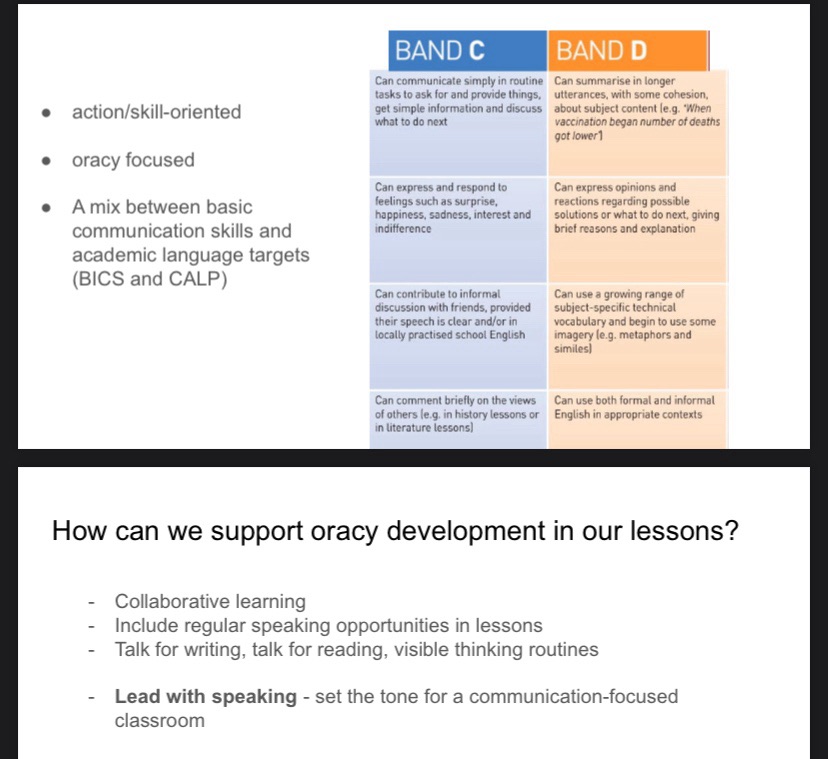
At this point, we reminded attendees that leading with oracy was HUGE, basically because there could be EAL learners in the class who don’t get chances to speak often in mainstream contexts. Priming learners for interaction early in the lesson can give them more confidence to contribute to class discussions later on in the learning. We can’t guarantee that’s the case, but we can guarantee that learners have had adequate opportunities to express themselves orally.
After the intro, we laid out various oracy-related lead-ins for subject teachers. Each time I outlined an idea, I related in back to the oracy framework – highlighting which aspects of oracy it may help to develop.
I regret starting with ‘word chains’ and vocab games in general:
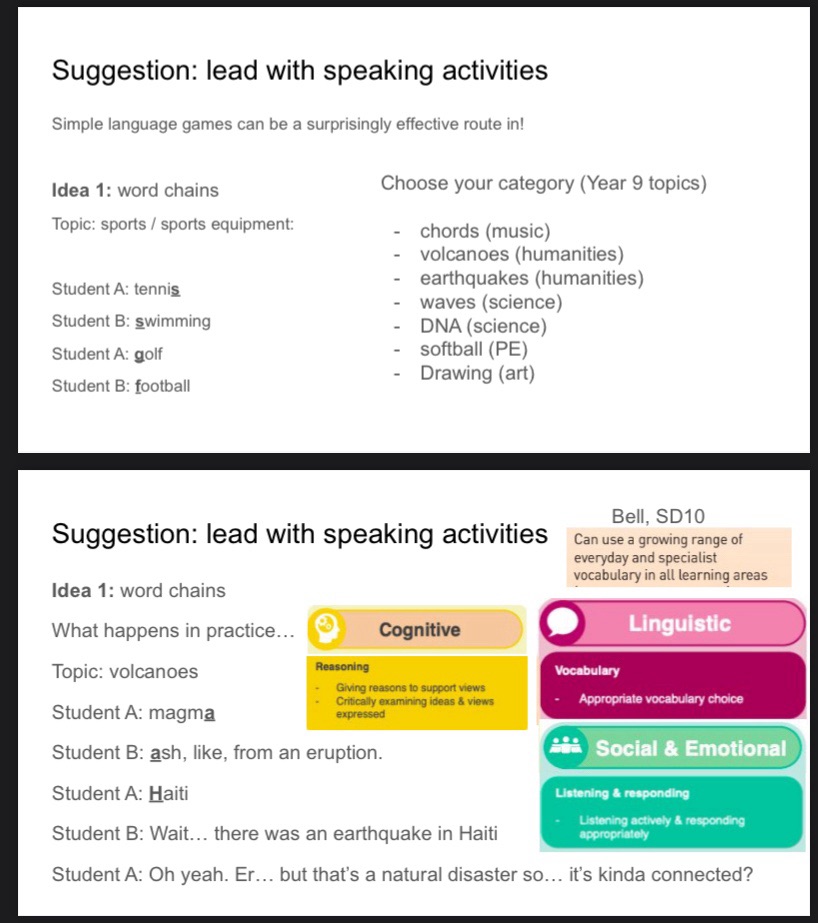
As it was too throwaway – I should have chosen something that would hook subject teachers more. Idea 2 (‘think of three’) was a much better springboard for teachers and learners regarding oracy development:
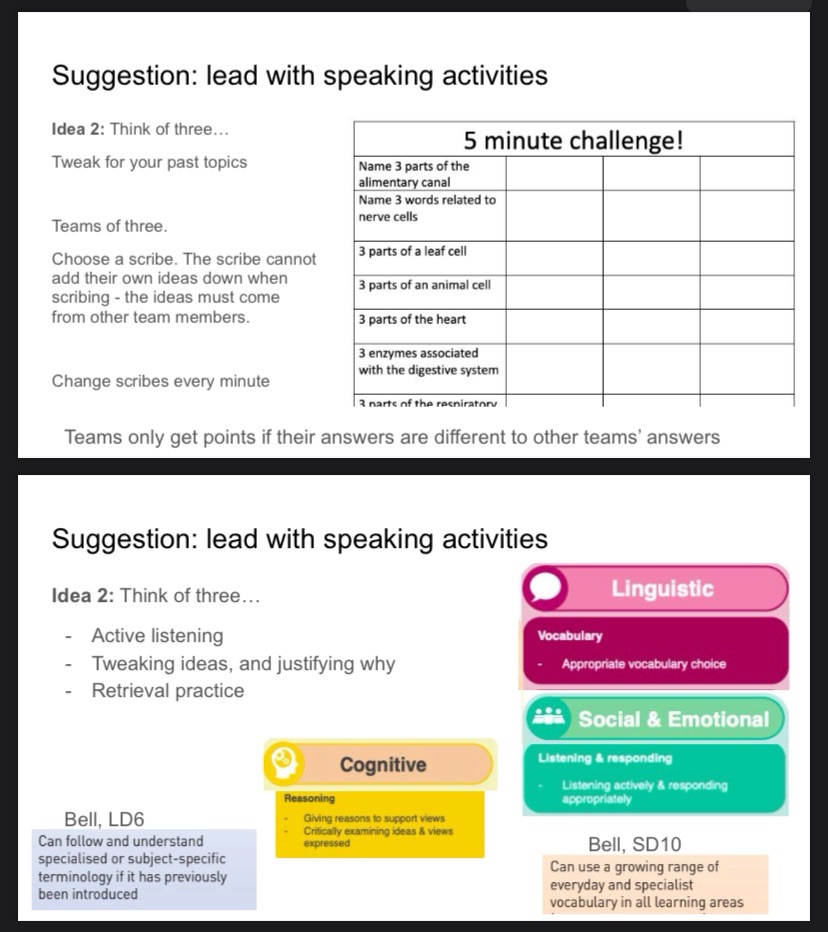
Note the reference to Bell LD6 also.
Idea 3 was much better again:
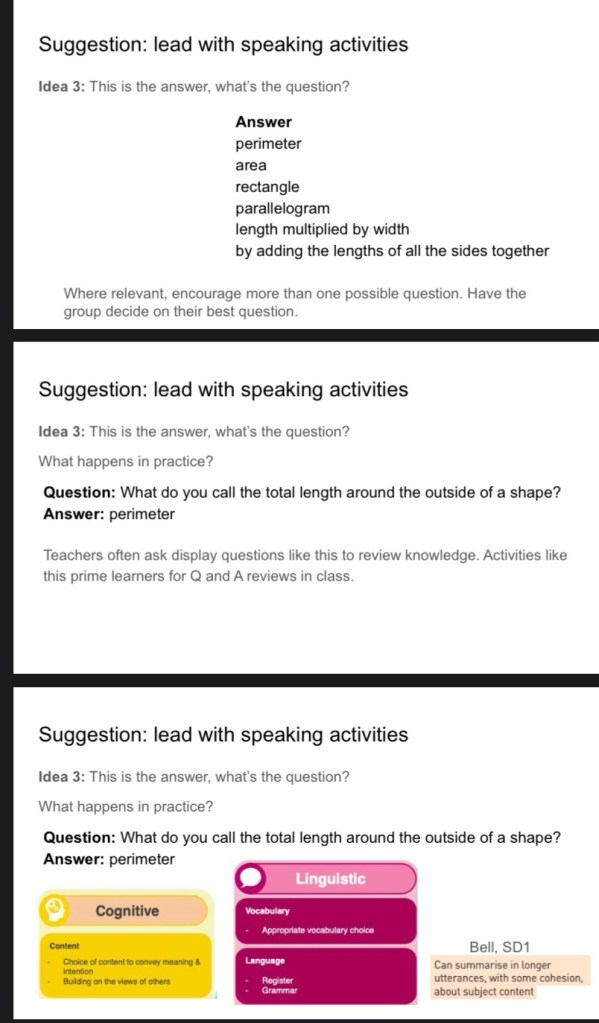
And started to really show how speaking lead-ins can be a great tool not only to build confidence, but also for formative assessment.
I felt like some ideas were more tweaks of everyday practice, like using retrieval grids for lead-ins. Others they were good adaptations of everyday activities, like making a ‘Do Now’ type settler into a speaking task. Is that practical for class teachers? I feel so.
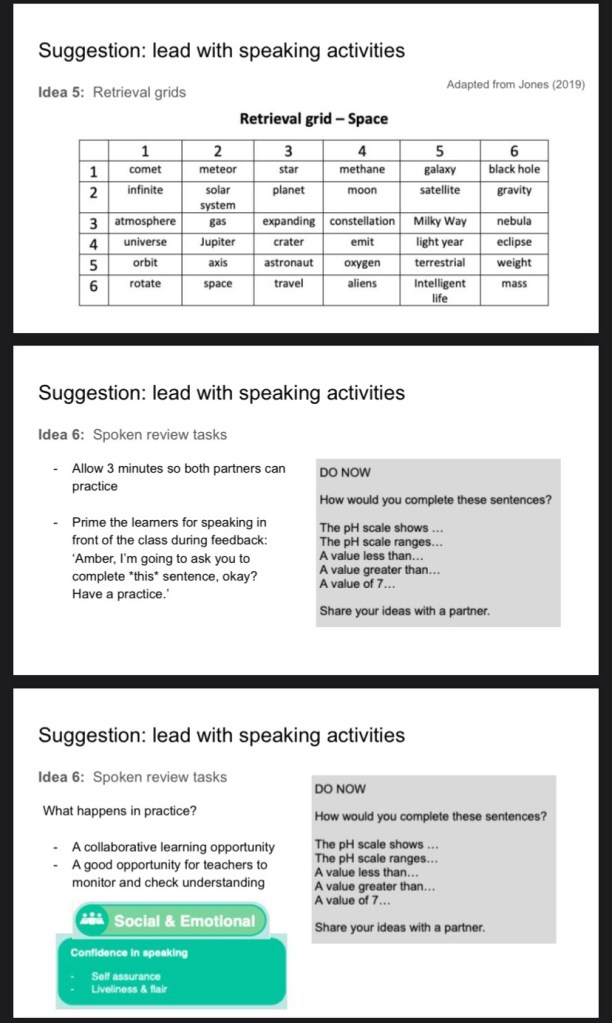
Anyway, here’s a list of the ideas introduced:
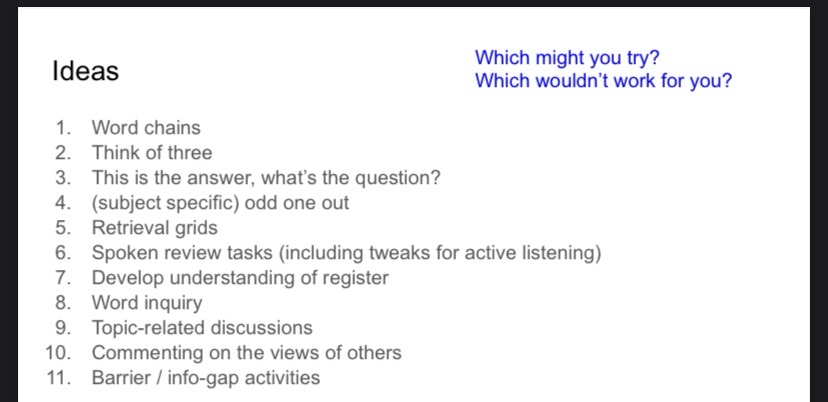
And a screenshot from the video to prove it exists!

Feedback
Some great discussions came of this one, especially with members of the English department. Chats about whether oracy is a fad were to be had also. Again, I need to follow up and request feedback, but based on the chats that arose I do think the session planted a seed for some.
Here are the slides if interested. If oracy lead-ins float your boat then I’m happy to share the vid. Just get in touch.
Happy CPDing!
Image: artformsleeds.co.uk
Categories: General, teacher development
 ELT Planning
Hi, Very interested to see your video on Oracy. I’m a retired EAL/SEN teacher, but I lead evening language lessons for Ukrainian refugees and would like to use some of these ideas, but also share the approaches with some of our non-trained by very enthousiastic volunteer teachers. Watching a video is always more engaging than reading slides. Many thanks in advance, Julia
LikeLike
Hi Julia, I know of some of your work through Sandy Millin’s blog. Can you get drop me a quick note through the ‘contact me’ link on the blog -that way I can link it via email. https://eltplanning.com/contact/
Cheers!
Pete
LikeLike