
Our current poetry unit with Year 6 is probably the strongest planning I’ve picked up this year. Minimal adaptation needed, mostly accessible, fun, and the level of challenge is spot on really. It just needs tiny tweaks. Here are some examples.
Most of the adaptations are needed after the model text and before the independent practice. We focused on haikus recently, and the intro to these was already pretty clear:
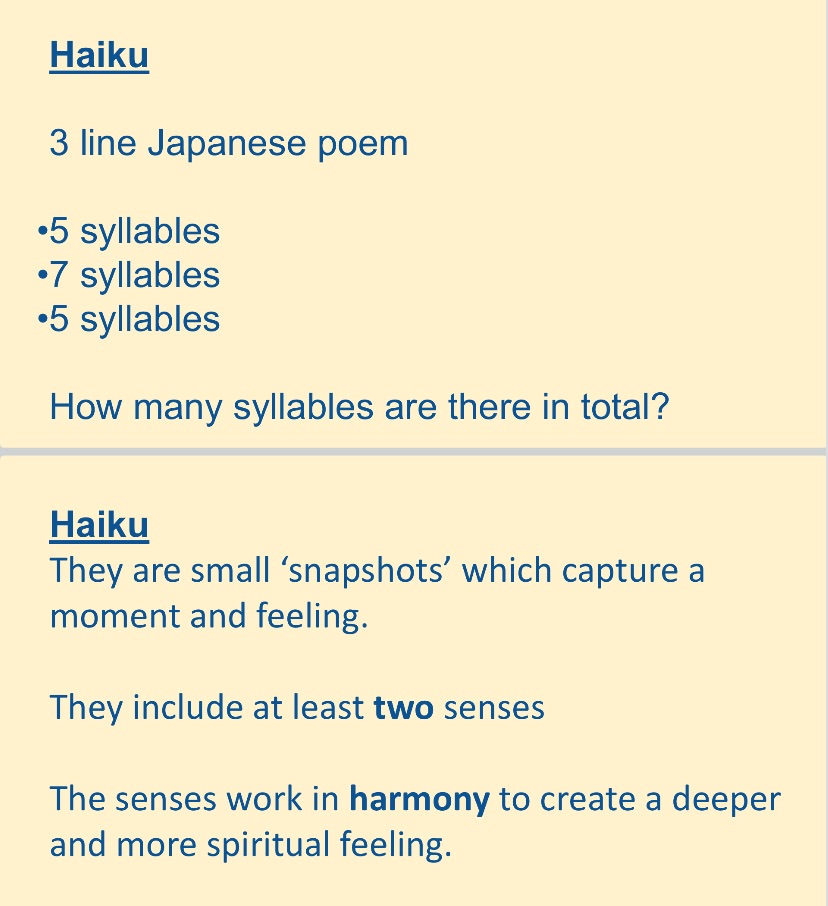
… with the model poems also clear. I added a few more example haikus to reinforce the main features of form and content, and in response to learners’ prior knowledge:
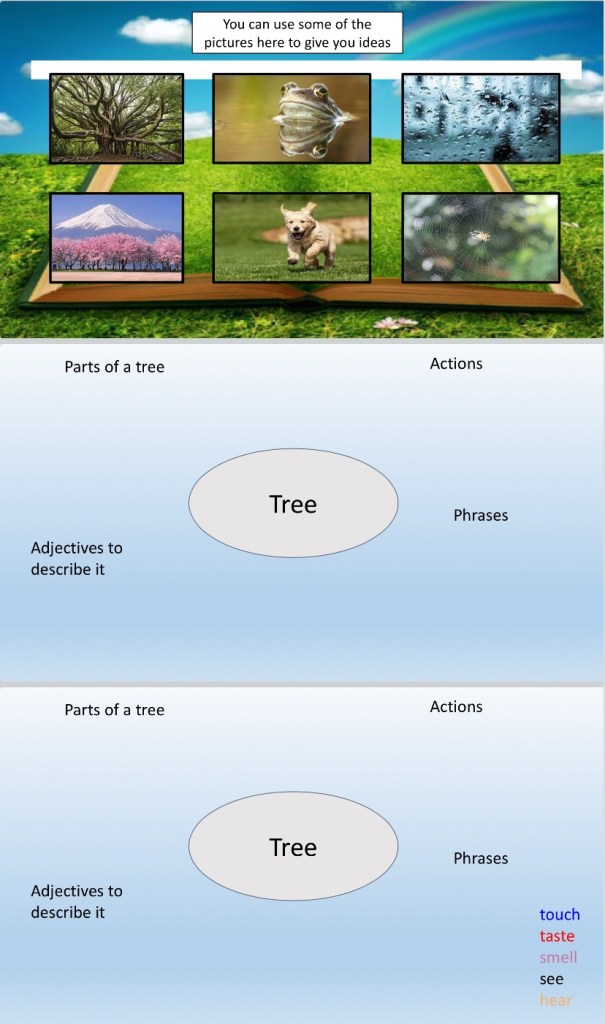
The poems above include some errors: too many syllables, not enough senses explored, lines not always relevant to the topic. They also include personification – one student had drawn attention to this technique in a previous poem and we drew it out as a teaching point, so we tapped into that a bit more (this was some off the cuff planning during the lesson).
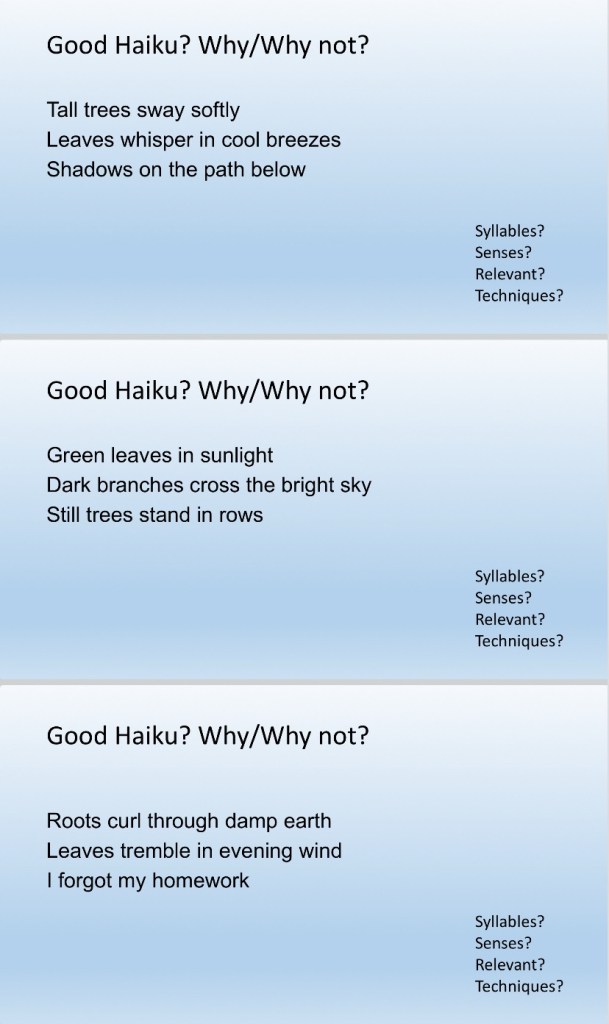
The resources mentioned the importance of planning before you write, but didn’t suggest for teachers to live model this. I live-modeled mind-mapping, then modeled how learners could colour-code their ideas related to the senses. This helped ensure they would be addressing multiple senses in their own poem.
As I said, we’re not talking anything ground-breaking, but these are the type of tweaks that give learners a bit more support when needed.
The next lesson objective was a specific focus on personification, so we’d primed for that.
The lead-in in the actual mainstream lesson was accessible for our learners:
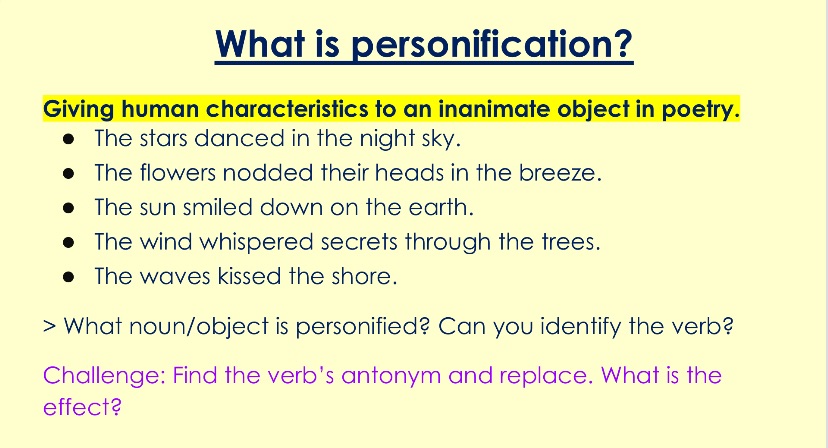
… but I felt that the ‘challenge’ was more of an essential part of the lesson here. It’s not just about identifying and using personification for the sake of it – it has an effect. To address this I just shaped the activity a bit differently:
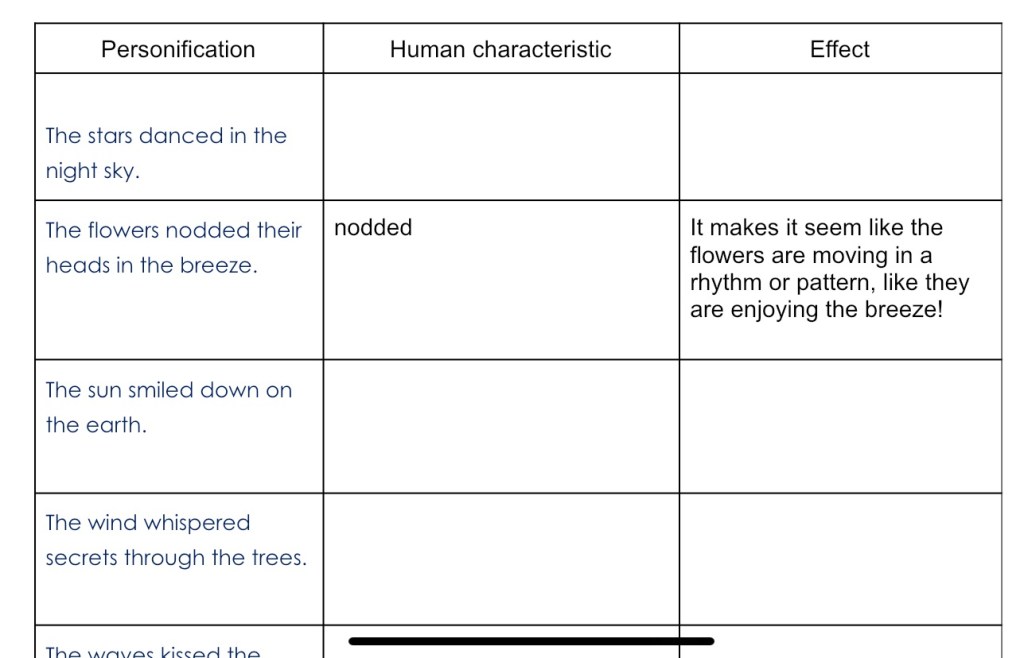
I talked through a couple of examples, made it clear that the effect could be sensory imagery, organic imagery, etc, and that it was down to the reader’s own interpretation. That prompted some interesting ideas and discussion, and I felt we were better placed when it came to understanding the purpose behind the technique.
As before, we analysed model poems including personification. These were already good, with this one about a football going down well with the learners:
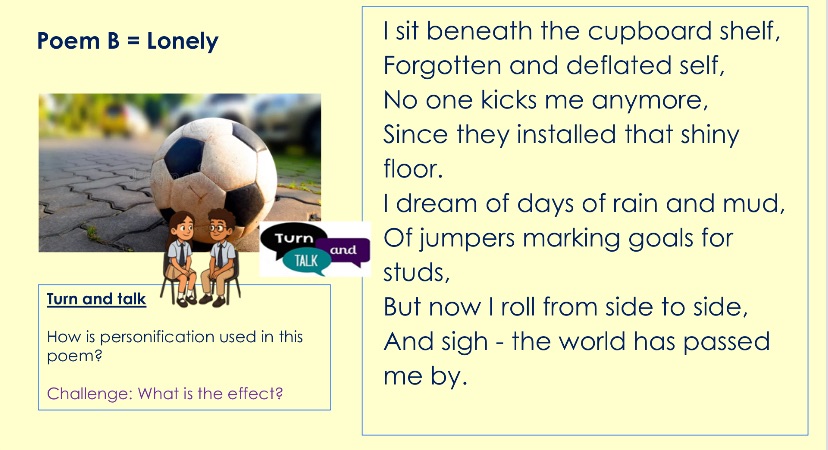
The analysis stage went okay – the readymade resources had nice scaffolding already:
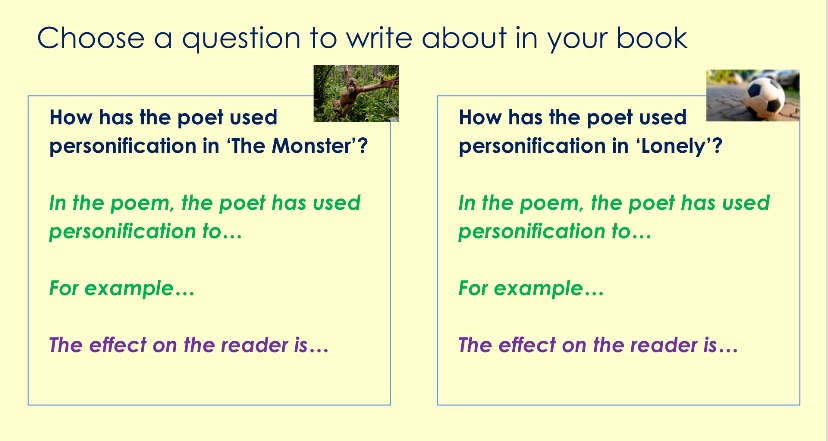
But the independent practice was a bit of a leap.
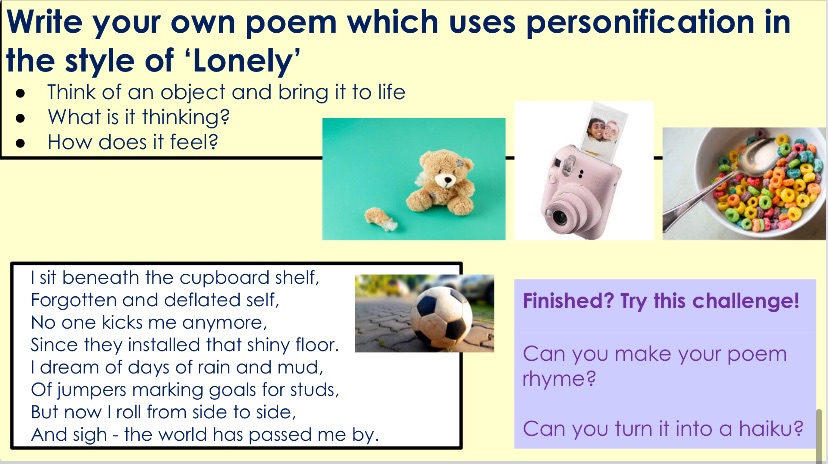
Sure, learners would plan first, but there wasn’t a planning scaffold provided. That was the tweak we needed here.
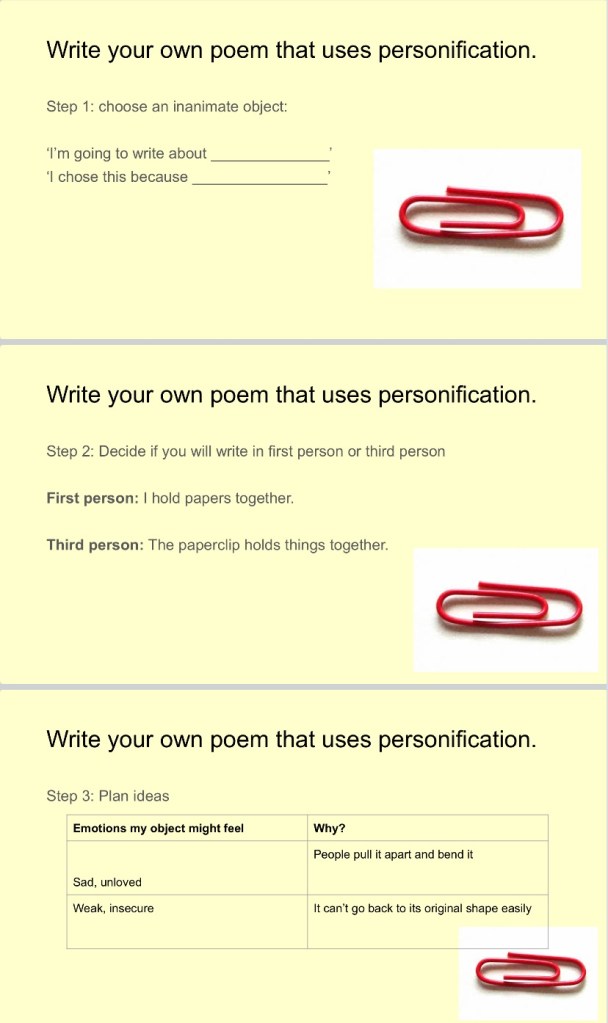
So, I chucked a few slides together quickly, which helped us go step-by-step:
And students recorded ideas on human-like actions, emotions, etc in a planning doc:
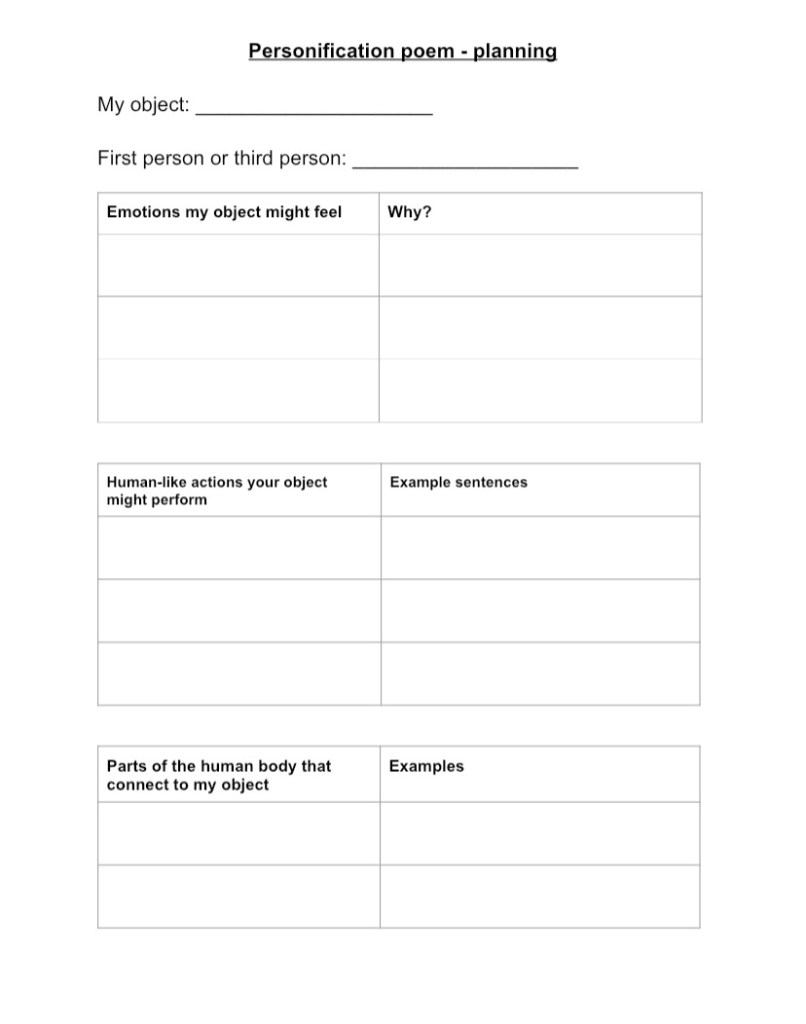
Very simple, but a few things came from this:
- Learners decided on a consistent ‘voice’, and there was a good mix of first/third person used. A good chance to think about the effect of that.
- I identified some gaps in vocab, and we threw up a word mat of actions and emotions vocab from ChatGPT as a scaffold.
- One learner wanted the word ‘deformed’ when talking about a scrunched up piece of paper, and it didn’t fit nicely in the table (I’ll adapt headings for next time). It led to a micro-teach on appropriacy of vocab choices – just exploring how it might be perceived. The scaffold was a springboard to discussion.
Some thoughts
I’m finding that it’s the planning-for-writing stages which often require scaffolds in our resources. It’s also the little steps at the ‘we do’ stage, whether it’s a live model or a bit of reinforcing the target language/technique/etc. Overall, I find that the existing poetry unit for this level is more tightly planned than previous units. I’m pretty sure that he teacher who planned it is an ex-TEFLer. You can spot ‘em a mile off…
Categories: General, teacher development
 ELT Planning
Leave a comment