I recently shared an example unit of work from our EAL syllabus. Here some further insight into the long-term and medium-term planning for our syllabus. We are only in the second year of setting up our provision. Year 1 was… Read More ›
reflections
A unit from our EAL syllabus
At my school, we have created a bespoke English syllabus for learners on our KS3 EAL pathway. This may not sound like an ‘ideal’ model of EAL provision to you – and fair enough. Ideals are subjective – provision is… Read More ›
Cover letters for international school jobs
How do you approach writing a cover letter/supporting statement for international school roles? Here’s what I do – I’ll explain it with some examples from previous applications… Step 1a: Research the school. Get a genuine sense for the mission, ethos… Read More ›
Embedding EAL in-class support
When we set up our EAL department last year we started with one HoD, one EAL teacher, and two EAL support coaches. As the HoD, I teach an 80% timetable. Our teacher has a full timetable. Our coaches oversee about… Read More ›
Another year in review
2024 vibe: PGCEi and AO QTS go-to! This year, I decided to get Qualified Teacher Status in England. It was a great decision to do this through the Uni of Sunderland – I’ve blogged about the overall experience and the… Read More ›
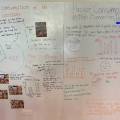
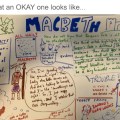
EAL response to literature displays
I recently mentioned how our learners created a final display board in response to a unit on poetry. Here’s a screenshot of what our common assessment checklist looked like for the final product: I could scrutinize here – there’s room… Read More ›
ChatGPT experiments: New unit intros (IGCSE ESL)
Luiz Octávio Barros was asking about scripts we feed ChatGPT the other day. I mentioned this: Which is a very boring example of an (over the word count) type IGCSE ESL text I generate for correction practice. I’m not *massively*… Read More ›
Conventional, common-sense vocabulary and grammar instruction (Boers)
Boers (2021) outlines six explicit vocabulary and grammar teaching practices that are backed up by research. He does so almost apologetically, noting that most of the practices align with more traditional/conventional methods, and that they also seem ‘commonsensical’. I lack… Read More ›
One of our research areas is missing
I’ve been flicking through Jamie Clark’s Teaching One-Pagers recently, and overall I’m a big fan. Evidence-informed summaries of research and practice – informative, accessible, perfect for the staffroom coffee table. As Oliver Caviglioli points out in the foreword, One-Pagers is… Read More ›
Pre-teaching academic vocabulary
This term we’re trialing an approach to pre-teaching academic vocabulary. Here’s the basic process: Step 1: Subject teachers identify 10-12 items of key vocab for an upcoming topic in either science, humanities, or maths. This should happen a couple of… Read More ›